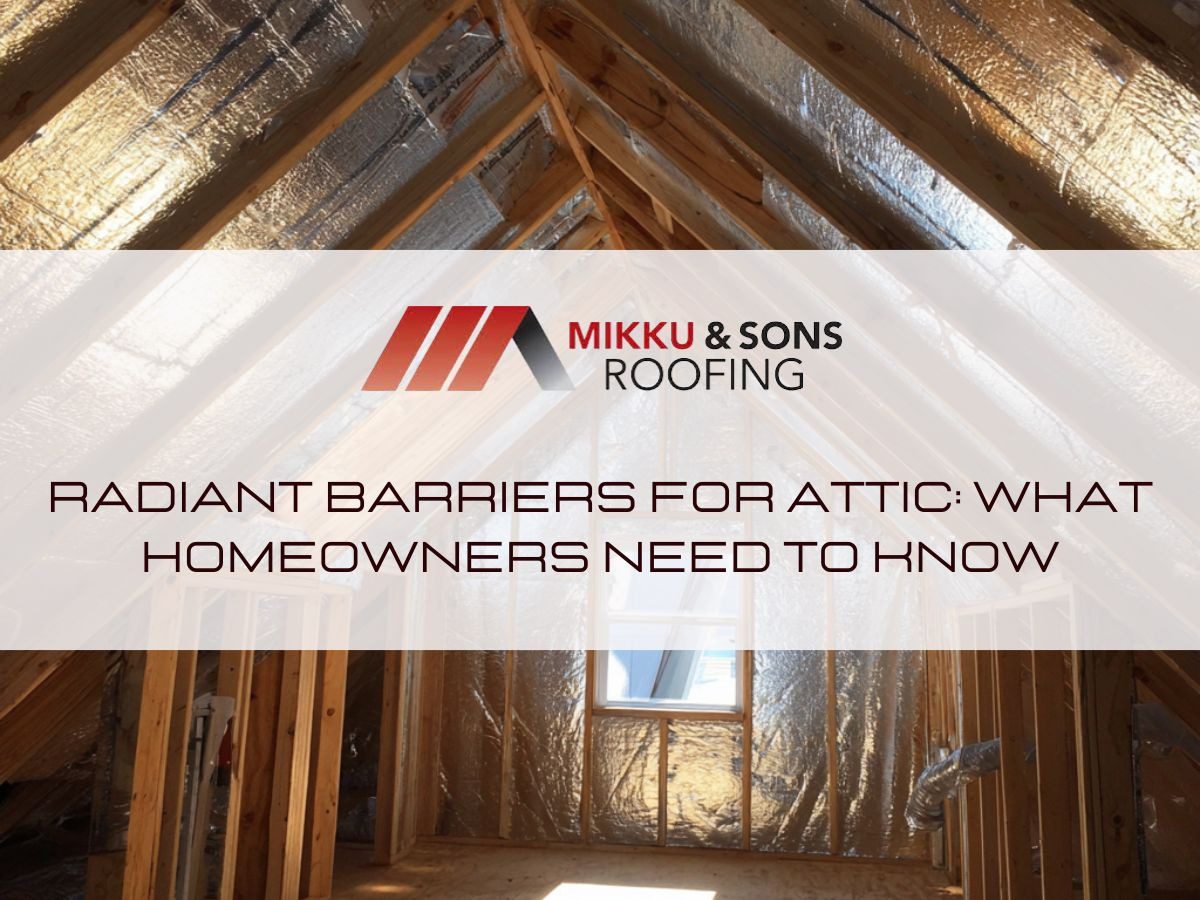
Radiant barriers are a distinct thermal control technology designed specifically to manage heat transfer through radiation. They differ from traditional insulation, which primarily resist conductive and convective heat flow.
The system typically employs a reflective foil surface to intercept and repel infrared energy before it permeates the attic space. Proper application can significantly reduce peak attic temperatures, altering the thermal load on the structure below.
While effective in specific conditions, these barriers are not a universal solution for all homes or climates. Their performance is dependent on correct installation, local climate severity, and the existing insulation envelope. Let's look at what homeowners need to know about radiant barriers for attic.
The principle of a radiant barrier is based on a specific form of heat transfer, separate from the processes that insulation addresses. All heat moves in one of three ways: conduction, convection, or radiation.
Standard attic insulation like fiberglass or cellulose works primarily against conduction, the heat that travels through solid materials, and convection, which involves heat movement through air currents.
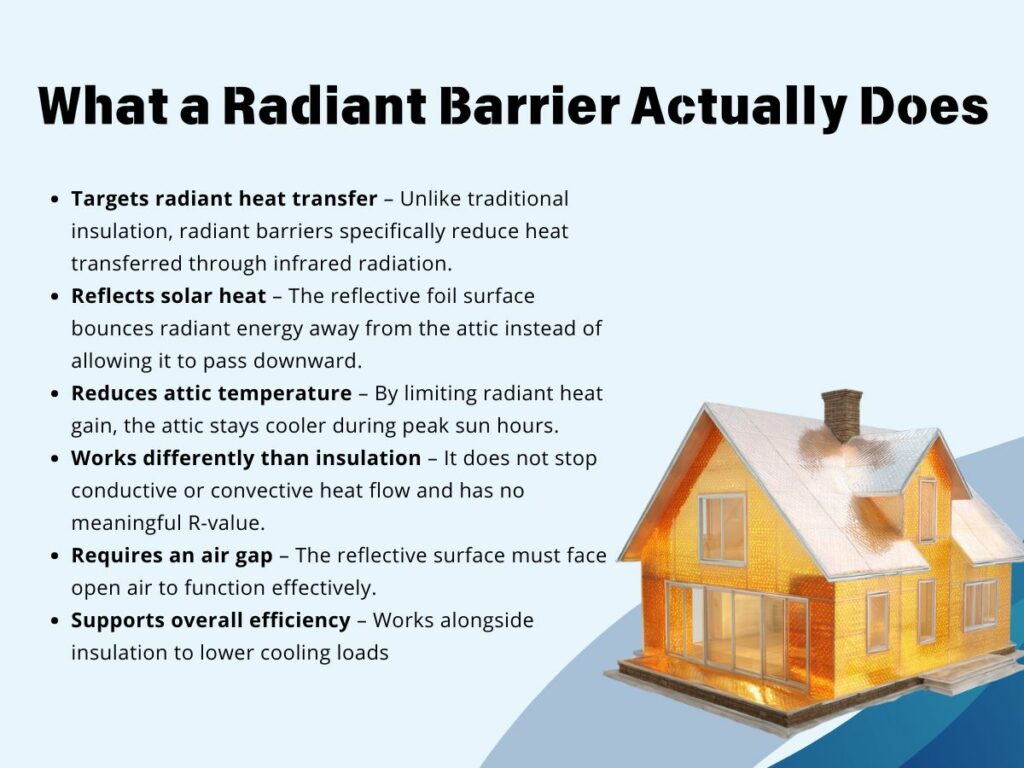
A radiant barrier targets radiant heat, which is electromagnetic infrared energy. This energy travels in a straight line from a hot surface to a cooler surface, without heating the air in between.
In an attic, the sun heats the roof decking, which then emits intense radiant heat downward toward the insulation and the living space below. A radiant barrier interrupts this specific energy transfer.
The functional component of a radiant barrier is a surface of low emissivity, typically a layer of aluminum foil. This surface possesses two key properties:
The combination of these properties allows the material to block radiant gain effectively. The barrier must face an open air space to function, as it cannot reflect heat if it is pressed tightly against another material like roof sheathing or insulation.
It is critical to distinguish this technology from bulk insulation. Insulation possesses a measurable R-value, which quantifies its resistance to conductive heat flow.
| Feature | Radiant Barrier | Traditional Insulation (Fiberglass / Cellulose) |
| Primary Heat Transfer Addressed | Radiation | Conduction and Convection |
| Measured Performance Metric | Reflectivity / Emissivity | R-value |
| Effectiveness in Summer | High (in suitable climates) | High |
| Effectiveness in Winter | Minimal | High |
| Requires Air Space | Yes | No |
| Can Replace Insulation | No | No (must meet code) |
| Typical Installation Location | Under roof deck or rafters | Attic floor or wall cavities |
A radiant barrier has no meaningful R-value since its performance is not measured by resistance but by reflectance. The efficacy of a radiant barrier depends on the temperature differential between the hot roof and the cooler attic floor.
Its impact is greatest in climates with long, intense cooling seasons where the sun consistently drives high attic temperatures. The system works in tandem with adequate attic insulation, addressing a different element of the total heat load that enters a building.
The suitability of a radiant barrier depends on specific environmental and structural factors. Its application is not universally advantageous, and its performance is tied to conditions where radiant heat transfer is the dominant source of thermal gain.
The technology delivers the most significant benefits in regions characterized by hot, sunny climates with prolonged cooling seasons. States across the Sun Belt, where summer solar radiation is intense and persistent, present the ideal operational environment for this system.
Performance diminishes in regions with mixed or heating-dominated climates. Homes in northern states or temperate coastal areas may see little to no practical benefit from the installation of a radiant barrier.
The primary reason is a reduced need for cooling and fewer hours of intense solar exposure on the roof. In these climates, the investment is difficult to justify, as the barrier would remain inactive for a substantial portion of the year.
The thermal challenges in such regions are better solved by increasing the R-value of traditional attic insulation and improving air sealing.
A critical prerequisite for any radiant barrier installation is an existing, adequate layer of bulk insulation on the attic floor. The barrier is a supplemental technology, not a substitute.
| Climate Type | Typical Cooling Demand | Radiant Barrier Effectiveness | Recommendation |
| Hot / Sunny (Sun Belt) | High | High | Strongly Recommended |
| Mixed Climate | Moderate | Low to Moderate | Case-by-Case |
| Heating-Dominated | Low | Minimal | Not Recommended |
| Coastal / Temperate | Low | Minimal | Generally Not Justified |
It is designed to work in conjunction with proper insulation, not replace it. The insulation handles conductive and convective heat flow from the attic air, while the barrier addresses radiant heat from above.
Installing a radiant barrier in an under-insulated attic will not correct the fundamental deficiency in the building envelope.
When installed in a compatible climate and correct structural context, a radiant barrier provides targeted performance benefits. These advantages are mechanical and measurable, focusing on the alteration of heat flow and system efficiency.
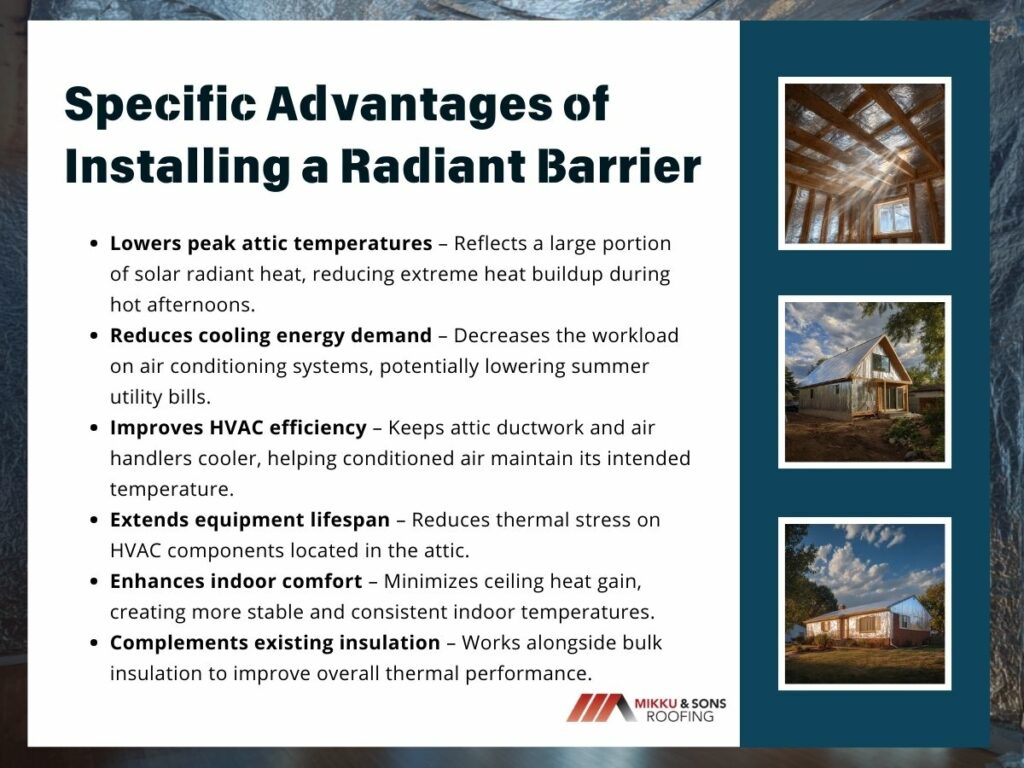
By reflecting radiant energy, the barrier prevents a substantial portion of the sun's thermal load from being absorbed into the attic space. This can lower the temperature differential between the living space and the attic, which directly reduces the conductive heat gain through the ceiling.
The attic becomes a less hostile thermal environment for any infrastructure housed within it.
Air conditioning systems operate against a reduced thermal load, which may allow them to run for shorter cycles or with less intensity. The magnitude of this saving is variable and depends on climate severity, home construction, and HVAC efficiency.
In optimized scenarios, the reduction in cooling demand can be significant over a season.
Ductwork and air handling units located in the attic are exposed to lower ambient temperatures. This reduces the conductive heat gain into the conditioned air moving through the ducts, improving the delivered air temperature and the overall efficiency of the distribution system.
The reduced thermal stress on these components can also contribute to extended service life.
The occupants below the attic have some improved comfort. This is often perceived as a more stable and uniform temperature, with fewer hot spots or areas of noticeable radiant warmth emanating from the ceiling during peak afternoon hours.
The effect complements the work of the insulation and the air conditioning system, creating a more controlled interior environment.
While a radiant barrier offers specific advantages, its performance is bounded by clear physical and practical constraints. A clear assessment of these limitations is necessary for accurate expectation setting and effective system design.
It provides no meaningful resistance to conductive or convective heat flow, which are the primary modes of heat loss in winter. Therefore, the technology is not designed to reduce heating energy consumption.
In heating-dominated climates or seasons, the barrier remains inert. The investment rationale must be based solely on summer cooling performance in relevant geographic zones.
In a typical attic environment, dust and other particulates can gradually accumulate on the reflective face. This layer of dust increases the surface's emissivity, allowing it to absorb and re-radiate more heat, which degrades performance over time.
The rate of this degradation depends on attic ventilation rates, local air quality, and the specific installation method. A barrier stapled to the underside of roof rafters is more susceptible to dust accumulation than one installed with the reflective surface facing a sealed air space.
The reflective surface must face an open air gap to effectively reflect radiant energy. Compressing the barrier against another material, such as roof sheathing or insulation, negates its function by enabling conductive heat transfer.
This requirement influences both the choice of installation method and the potential for retrofit in existing attics with limited clearance.
Material selection also influences long-term performance. Key considerations include:
A radiant barrier’s viability is not universal but is determined by a strict evaluation of climate, existing building envelope performance, and correct installation. When applied within its optimal parameters the system can effectively reduce peak attic temperatures and contribute to lower cooling loads.
This technology's effectiveness is intrinsically linked to the geometry and exposure of the roof itself. The roof's shape, pitch, and orientation define the surface area exposed to solar radiation and the volume of the attic space being heated.
A simple, high-pitched gable roof presents a large, direct target for the sun, potentially creating a significant radiant heat gain that a barrier can address. Conversely, complex roof shapes with multiple valleys, dormers, or low slopes alter the solar exposure and can complicate the installation of a continuous, effective barrier plane.