Affordable faux slate roof options include composite slate, synthetic polymer tiles, rubber slate shingles, stone-coated steel, and slate-profile asphalt each designed to deliver the classic slate look at a fraction of the cost. These modern alternatives are lightweight, durable, and visually appealing, making them an ideal choice for homeowners who want premium curb appeal without the premium price.
In this article, you’ll also find comparisons of these materials, cost ranges, durability, installation tips, maintenance guidance, and how to choose the right option for your home along with practical ways to save on your faux slate roof project.
Faux slate roofing gives homeowners the classic, upscale look of natural slate while eliminating many of the drawbacks that come with it. It combines modern materials with traditional design to create a practical and stylish roofing solution.
Faux slate costs significantly less than natural slate in both materials and installation. This makes it possible to achieve a premium look without exceeding your budget.
Unlike real slate, faux slate is much lighter and does not require structural reinforcement. This makes installation easier and suitable for most existing homes.
Most faux slate products are designed to resist cracking, impact, and harsh weather. This helps extend the life of your roof and reduces repair needs.
Faux slate tiles are more uniform and easier to handle than natural stone. This results in faster installation and lower labor costs.
These materials do not absorb moisture or flake like real slate. Routine inspections and basic cleaning are usually all that’s needed.
Many faux slate products are made from recycled rubber or plastics. This reduces waste and supports more sustainable building practices.
Faux slate offers the beauty of traditional slate with added affordability, durability, and convenience. It’s an excellent choice for homeowners who want a long-lasting, attractive roof without the complications of natural stone.
Faux slate roofing comes in several material types, each offering a different balance of cost, appearance, and durability. Understanding these options helps homeowners choose the best solution for their budget and climate.
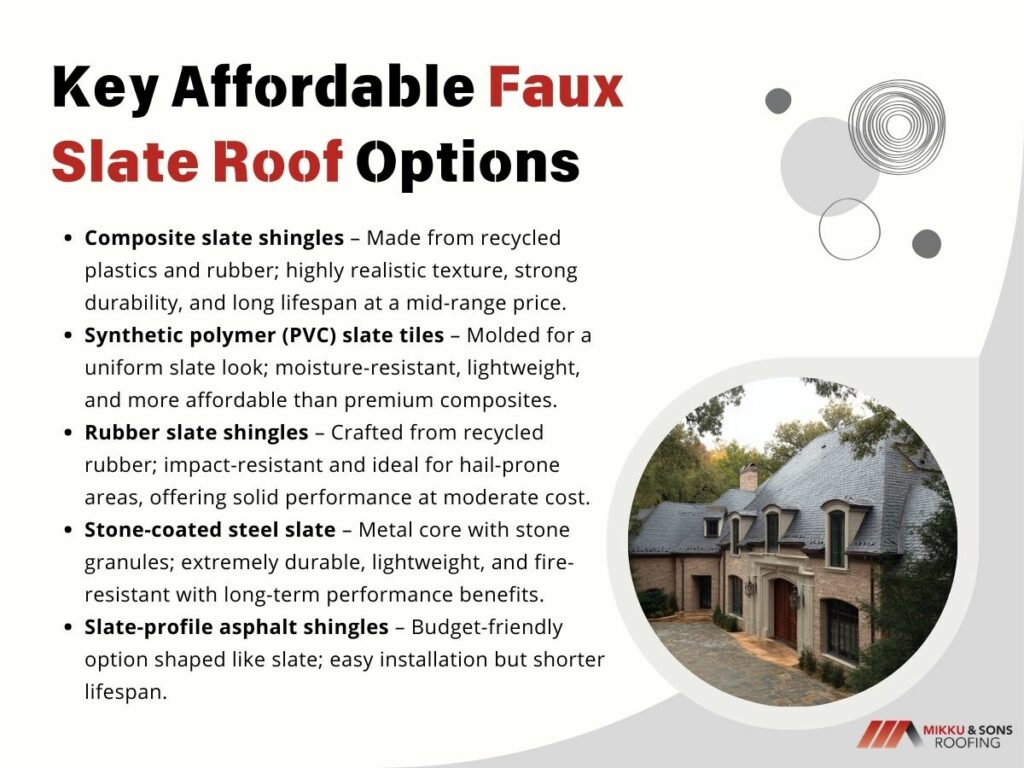
Composite slate shingles are made from blends of recycled plastics, rubber, and polymers designed to replicate the look of natural slate. They offer excellent durability, realistic texture, and long lifespans while remaining lighter and less expensive than real stone. This makes them a popular mid-range option for homeowners seeking both beauty and performance.
These tiles are manufactured from molded polymers that create a consistent slate-like appearance. They are more affordable than high-end composites and resist moisture, mold, and cracking. While slightly less textured, they still provide a clean, attractive slate look.
Rubber slate is typically made from recycled tires and other rubber materials, making it an eco-friendly option. It is highly impact-resistant and performs well in hail-prone areas. Although the color and style range may be more limited, it offers solid durability at a lower price point.
Stone-coated steel combines a metal base with stone granules to create a slate-style finish. It is extremely lightweight, fire-resistant, and built to last for decades. While slightly more expensive than some other faux slate options, it delivers exceptional strength and weather protection.
These asphalt shingles are shaped and colored to resemble slate at a much lower cost. They are widely available and easy to install, making them the most budget-friendly option. However, they typically have a shorter lifespan and less realistic appearance than other faux slate materials.
Each affordable faux slate roofing option offers its own mix of style, durability, and price. By comparing these materials, homeowners can find a solution that delivers the elegant look of slate while staying within budget.
With so many faux slate roofing materials available, comparing them side by side is the best way to find the right balance between cost, appearance, and long-term performance. Key factors such as durability, weight, maintenance, and lifespan can vary significantly depending on the material you choose.
| Feature | Composite Slate | Synthetic (PVC/Polymer) | Rubber Slate | Stone-Coated Steel | Slate-Profile Asphalt |
| Appearance | Very realistic with natural textures | Clean, uniform slate look | Slightly softer, less stone-like | Highly detailed, sharp slate look | Least realistic |
| Cost Level | Medium–High | Medium | Medium | Medium–High | Low |
| Durability | High | Moderate–High | High | Very High | Moderate |
| Weight | Light | Light | Light | Very Light | Light |
| Maintenance | Low | Low | Low | Very Low | Moderate |
| Expected Lifespan | 30–50+ years | 20–40 years | 25–40 years | 40–70+ years | 15–30 years |
For the most authentic slate look, choose composite or stone-coated steel, while slate-profile asphalt is best for the lowest cost. Rubber and polymer offer a balance of durability and price, and storm-prone areas benefit from impact-resistant rubber or steel.
Comparing faux slate options using factors like cost, lifespan, weight, and realism makes it easier to choose the best roofing material for your needs. The right choice will give you the beauty of slate while matching your budget, climate, and long-term maintenance expectations.
Proper installation is just as important as choosing the right faux slate material. Following best practices helps ensure your roof performs well, lasts longer, and looks great.
A high-grade underlayment provides an extra layer of moisture protection beneath your faux slate tiles. It also helps prevent leaks and extends the life of the roof.
Good attic ventilation reduces heat and moisture buildup that can damage roofing materials over time. This improves energy efficiency and prevents premature aging.
Faux slate roofing requires precise fastening and alignment for best results. A professional installer helps avoid mistakes that could lead to leaks or tile damage.
Each faux slate product has specific installation requirements. Following them ensures warranty protection and optimal performance.
Some faux slate materials work better on steeper roofs. Making sure your roof structure matches the product helps prevent drainage and stability issues.
By following these installation tips and best practices, you can maximize the lifespan and appearance of your faux slate roof. A properly installed system delivers better protection, performance, and long-term value for your home.
Faux slate roofing is designed to be low maintenance, but regular care helps keep it looking good and performing well. Simple upkeep can prevent small issues from turning into costly repairs.
Clear leaves, branches, and dirt from the roof and gutters to prevent moisture buildup. This helps protect the surface and improve drainage.
Check for loose, cracked, or missing tiles following severe weather. Catching damage early prevents leaks and structural problems.
Use gentle washing to remove algae, mold, or stains. Avoid harsh chemicals that could damage the material’s finish.
Swapping out broken or worn pieces keeps the roof watertight. Quick repairs also maintain the roof’s overall appearance.
Cutting back overhanging branches reduces the risk of impact damage and excess debris. It also limits moss and algae growth from shade and moisture.
With simple, routine maintenance, a faux slate roof can last for decades while maintaining its attractive appearance. Regular inspections and basic cleaning ensure your investment stays protected and problem-free.
When planning a faux slate roofing project, understanding the typical installed costs helps homeowners make informed choices that balance budget and style. Costs can vary based on material, roof complexity, and local labor rates.
Installed Cost Comparison (per square foot)
Comparing these costs allows homeowners to choose a faux slate option that fits their budget while still achieving the desired look and performance. With careful planning, it’s possible to enjoy the beauty of slate without the steep price of natural stone.
A faux slate roof can be more affordable than natural slate, but smart planning and strategic choices can further reduce costs without sacrificing quality or appearance.
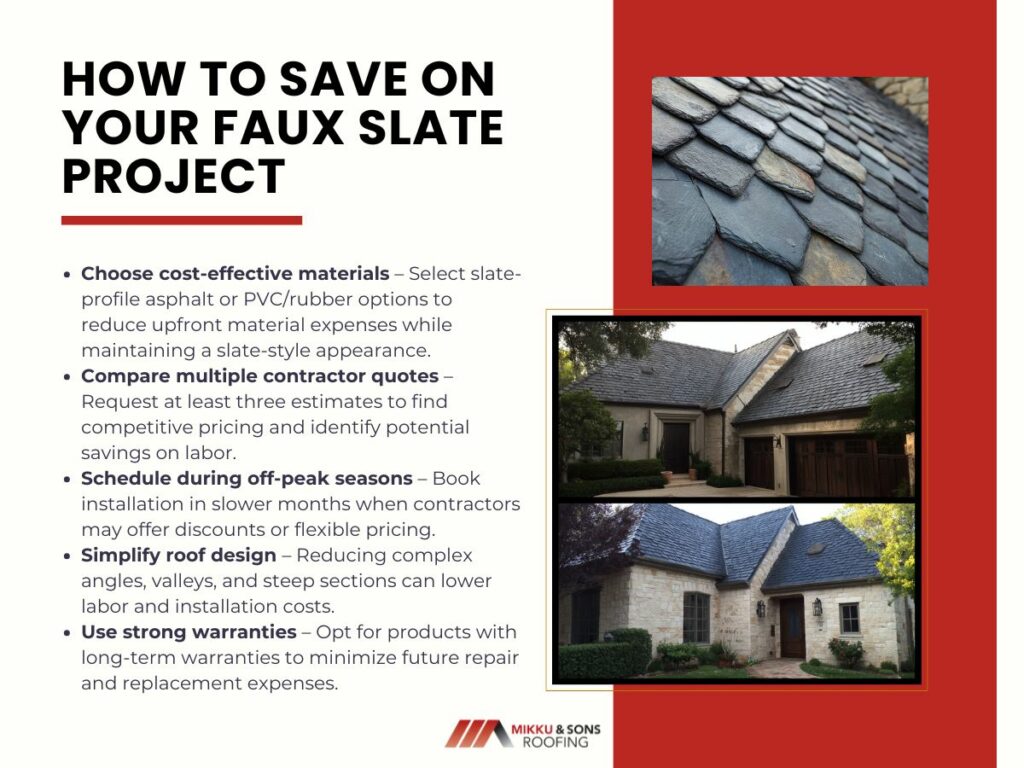
By carefully selecting materials, comparing quotes, timing installation, and planning efficiently, homeowners can save substantially on their faux slate roofing project while still achieving a durable, attractive roof.
Faux slate roofing offers the elegance of natural slate without the high cost or heavy structure. With options like composite, polymer, rubber, stone-coated steel, and slate-style asphalt, there’s a solution for nearly every budget and style, providing long-lasting protection and curb appeal.
By comparing materials, planning wisely, and following installation and maintenance best practices, homeowners can maximize value. Smart choices ensure a durable, attractive roof that enhances both the home’s appearance and long-term investment.