

Roof emergencies place immediate strain on homeowners who face structural risks and urgent repair needs. Insurance delays increase anxiety because each hour of inaction exposes the property to further damage.
Insurance carriers process claims based on documentation, severity, and internal workload. Heavy storm seasons create backlogs that extend standard response times significantly.
Water intrusion, structural shifts, and electrical hazards escalate rapidly without immediate intervention during emergency roof failures. Insurance delays add complexity because temporary protection may require out-of-pocket expenses before reimbursement occurs. Let's look at dealing with insurance delays during roof emergencies.
Roof emergencies demand immediate attention to prevent further damage and ensure family safety. Homeowners who respond quickly reduce repair costs and mitigate structural risks effectively.
Preparation and decisive action allow homeowners to maintain control during stressful situations. Early interventions also support insurance claims by providing clear evidence of the damage.
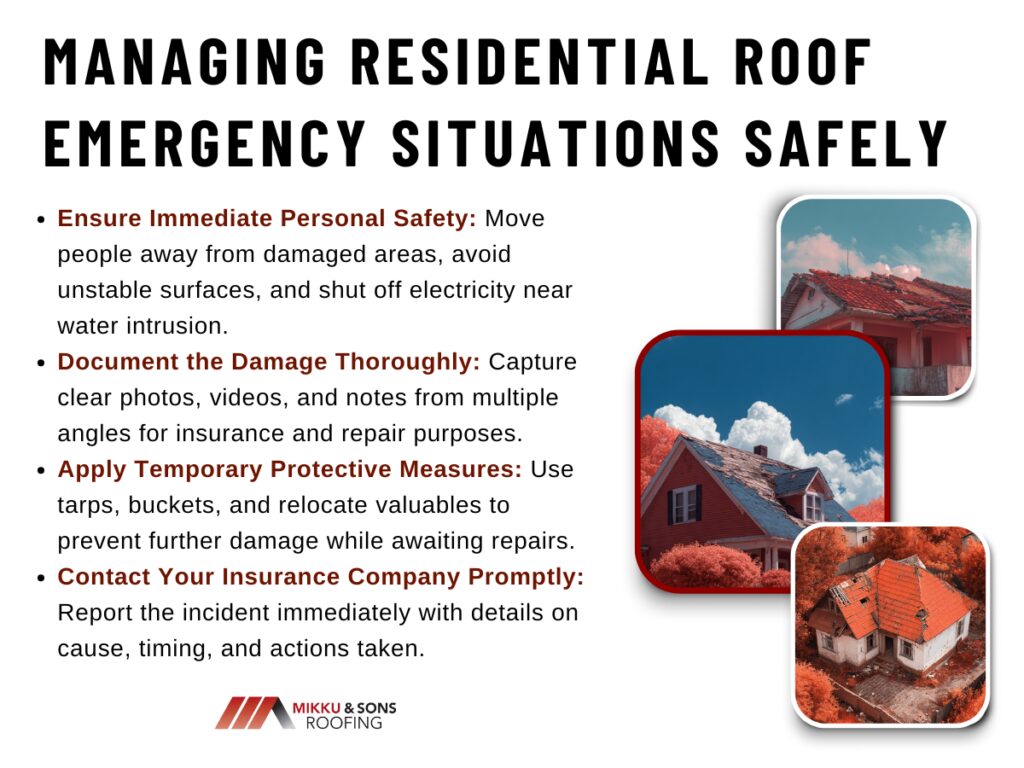
The first priority is to protect yourself, family members, and pets from hazards caused by damaged roofing. Fallen debris, unstable surfaces, and leaks create immediate risks that require careful navigation.
Move everyone to a secure area away from compromised sections of the home. Avoid walking on damaged roofing or attempting repairs without proper expertise and protective equipment.
Safety measures include:
These steps prevent injury while allowing later inspections or repairs to proceed safely. Clear identification of hazards also helps contractors and insurance adjusters assess damage efficiently.
Homeowners should capture detailed records of the damage immediately after ensuring safety. Photographs, videos, and written notes provide evidence for insurance claims and repair planning.
Include multiple angles, close-ups of damage, and contextual images showing the roof’s location. Annotate images with dates and descriptions to create an accurate and organized record.
Proper documentation accelerates claim approvals and reduces the risk of disputes. Insurers rely on clear, verifiable evidence to determine coverage and expedite inspections.
Temporary interventions stabilize the roof and prevent additional damage while waiting for professional repair. Only implement measures that maintain safety and do not worsen structural issues.
Avoid walking on damaged surfaces or attempting complex repairs without professional guidance. Temporary measures may involve:
These actions protect the home from escalating issues and minimize insurance claim complications. Timely temporary solutions demonstrate diligence to insurers and can influence claim approval speed.
Inform your insurance provider as soon as possible to initiate the claims process. Early reporting helps document the timeline of damage and ensures adjusters prioritize urgent situations.
Provide detailed information about the incident, current safety measures, and damage documentation. Insurers often guide next steps and advise on approved contractors or temporary repair allowances.
Include:
Prompt communication reduces delays and aligns the repair process with policy requirements. It also establishes a clear record that protects homeowners during claim evaluations.
Roof emergencies often expose gaps in homeowners’ understanding of their insurance coverage. Clear knowledge of policy terms, limits, and exclusions helps prevent surprises during urgent repairs.
Awareness of coverage scope allows homeowners to plan temporary measures, document damages effectively, and communicate confidently with insurers. Reviewing policies in advance reduces delays and ensures smoother claims.
Policies may provide different forms of coverage depending on damage type, age of the roof, and policy provisions. These distinctions clarify what repairs or replacements qualify for reimbursement.
Common coverage types include replacement cost, actual cash value, and limited roof insurance for older structures. Replacement cost policies pay for full repair or replacement without depreciation deductions, while actual cash value accounts for wear and tear.
Verify whether policies cover:
Correct classification of coverage prevents denied claims and supports faster approvals. Insurers often provide detailed explanations in policy documents or customer portals.
Exclusions define circumstances where coverage does not apply, often including roofs past a certain age or damage from lack of maintenance. Limits set the maximum payout for covered damages, which may differ between types of coverage or roof components.
Review limits on shingles, structural elements, and labor costs to estimate potential out-of-pocket expenses. Common exclusions may include roofs older than the policy’s specified age limit, damage caused by neglect or deferred maintenance and cosmetic or non-structural issues not affecting safety.
Deductibles influence the immediate cost homeowners must pay before insurance coverage applies. Higher deductibles reduce premiums but increase out-of-pocket expenses during emergencies.
Filing multiple claims in short periods may affect future premiums or eligibility for full coverage. Homeowners must weigh the urgency of repair against potential premium adjustments.
| Deductible Type | Typical Amount | Effect on Claim |
| Flat Deductible | $500–$2,000 | Homeowner pays this amount first; insurer covers remaining approved costs |
| Percentage Deductible | 1–5% of insured value | Deductible scales with home value; may increase out-of-pocket cost for large homes |
| No Deductible | $0 | Rare; insurer covers approved costs fully, may have higher premium |
Accurate knowledge reduces stress, speeds claim processing, and protects property.
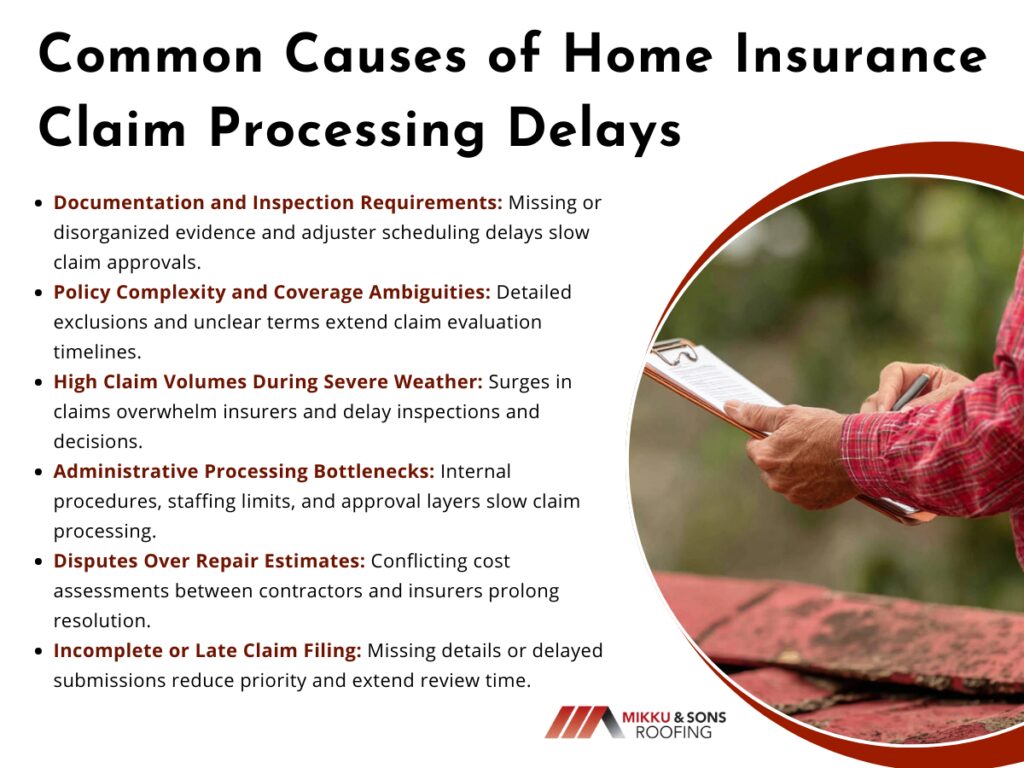
Insurance delays often frustrate homeowners during roof emergencies and prolong exposure to further damage. Delays may result from documentation gaps, complex policies, heavy claim volume, or administrative bottlenecks.
Awareness of these factors helps homeowners communicate effectively and accelerate approvals.
Insurers require comprehensive evidence to verify claims, which can extend approval timelines. Provide photos, repair estimates, and detailed descriptions of damage.
Adjusters often conduct in-person inspections to confirm structural integrity and assess risks. Scheduling depends on adjuster availability, property location, and workload, causing delays that last several days.
Organized, complete documentation prevents repeated requests and accelerates claim processing. Clear records improve communication between homeowners, contractors, and insurance adjusters.
Insurance policies contain detailed provisions, exclusions, and limitations that require careful review. Adjusters evaluate whether damages meet coverage terms, often extending approval timelines.
Disputes frequently arise over roof age, hail, wind, or prior maintenance requirements. Early clarification of these terms reduces misunderstandings and prevents unnecessary claim delays.
Review policies in advance and confirm coverage with the insurer to ensure the limits and exclusions that align expectations with actual benefits.
Severe weather events increase claims and overwhelm adjuster availability. Delays occur when multiple inspections and approvals are required simultaneously.
Communication gaps arise if insurers cannot promptly contact homeowners. Regular follow-up ensures claims remain active and reduces risk of lost updates.
Proactive homeowners prepare by documenting damage quickly and using licensed contractors. Early action mitigates delays and protects property from further deterioration.
Internal insurer procedures, staff shortages, and approval hierarchies often slow claims. Multiple departments may need to verify coverage, review estimates, or approve payments.
These procedural delays can take days or weeks, especially during peak seasons. Homeowners may experience confusion or repeated requests for the same information.
Maintaining clear, concise records and following submission instructions reduces administrative lag. Homeowners who anticipate these steps can avoid frustration and streamline approvals.
Conflicting repair estimates between contractors and insurers often delay claims. Adjusters may question materials, labor costs, or required repairs before approving coverage.
Homeowners frequently encounter back-and-forth discussions when contractors and insurers disagree. These disputes prolong timelines and leave homes vulnerable to ongoing damage.
Using licensed contractors who provide detailed, professional estimates can reduce conflicts. Documentation of damage and cost transparency accelerates approval and avoids unnecessary delays.
Claims submitted with missing information or delayed notices often face prolonged review. Insurers may return incomplete applications for clarification, further delaying repairs.
Late reporting can also influence claim priority, particularly during peak disaster seasons. Insurers may focus on early or urgent filings, leaving late submissions lower in queue.
Homeowners should file claims immediately after damage occurs and include complete documentation. Prompt, accurate filing ensures faster attention and minimizes risks of secondary damage.
Homeowners can take proactive steps to reduce insurance delays and accelerate roof emergency repairs. Organized preparation, timely communication, and professional support create smoother claim experiences.
These strategies ensure safety, protect property, and minimize the financial impact of prolonged waiting periods. Clear, structured action improves coordination between insurers, contractors, and homeowners.
Insurance adjusters approve claims faster when all supporting documents accompany the initial submission. Photos, videos, contractor estimates, and written damage descriptions provide clear evidence.
Include interior and exterior images, roof measurements, and previous repair records. Annotating photographs with dates and context strengthens the submission.
Licensed contractors provide detailed, professional estimates that insurers accept readily. Their expertise ensures repair scopes, material specifications, and cost breakdowns meet policy requirements.
Contractors may communicate directly with insurance adjusters to clarify repair plans. This direct liaison streamlines approvals and prevents disputes over coverage.
Working with contractors experienced in insurance claims benefits homeowners. Their reports reduce questions, accelerate inspections, and minimize approval bottlenecks.
Frequent updates with your insurer ensure claims remain active and visible. Track emails, phone calls, and online portal updates to avoid overlooked steps.
Documenting each interaction creates a paper trail in case of disputes. This record helps prove timely responses and cooperation with the insurer.
Regular communication prevents unnecessary pauses and ensures claims progress steadily. It also reduces homeowner stress during roof emergencies.
Taking immediate steps to protect the home demonstrates diligence to insurers. Temporary fixes reduce further damage while waiting for approval.
Common measures include placing tarps over exposed areas, securing loose shingles, and moving valuables from risk zones. Homeowners must avoid repairs that compromise safety or cause additional damage.
Temporary protective actions may include:
These measures preserve property value, improve safety, and support faster inspections. Insurers often view proactive homeowners as responsible, which can influence approval speed.
Replacing a roof after an insurance claim does not automatically increase premiums. Insurers consider the home’s age, claim history, and local risk factors before adjusting rates.
Proactive communication with your provider about repairs and coverage ensures transparency. Maintaining documentation of completed work and quality materials can demonstrate reduced risk, potentially preventing future rate increases.
Choosing a new roof that meets code requirements and reduces hazards may also improve insurance eligibility. These measures help homeowners protect their investment while stabilizing premiums over time.