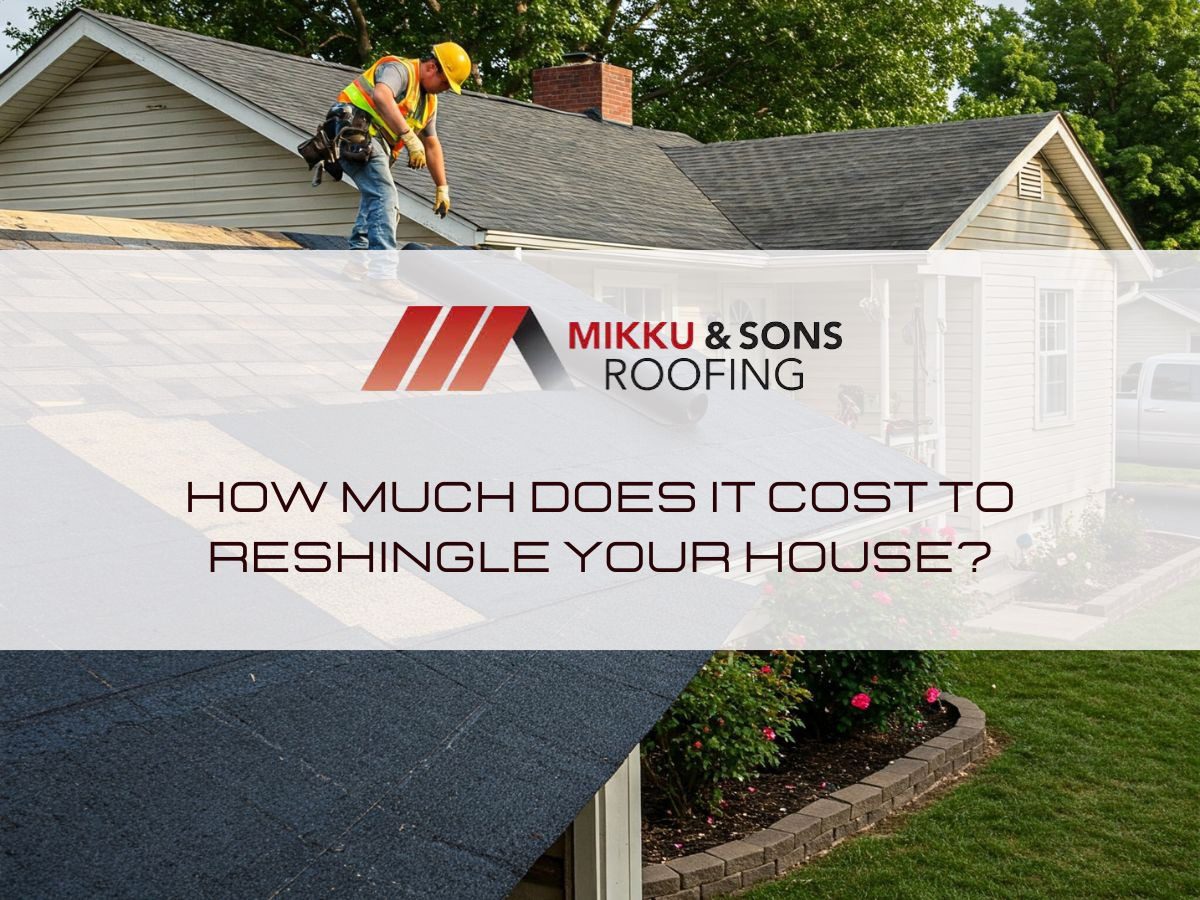
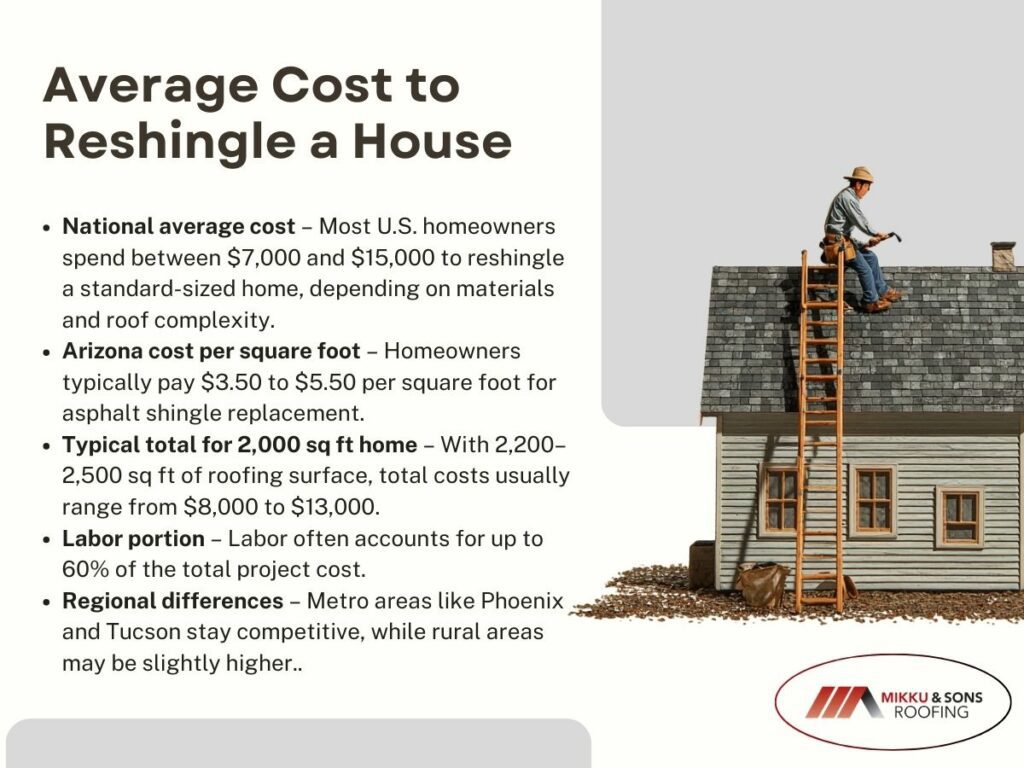
If you're planning to reshingle your house in Arizona, you're likely wondering what kind of price tag to expect. How much does it cost to reshingle your house? On average, U.S. homeowners pay between $7,000 and $15,000 to reshingle a standard-sized home.
In Arizona, costs often fall right in the middle of that range, thanks to the state’s dry climate and regional labor rates. But the final price you pay depends on a mix of factors: your roof size, the material you choose, the pitch of your roof, and whether existing shingles need to be torn off. This guide walks through what influences the cost and what Arizona homeowners should expect before scheduling a reroofing project.
Most homeowners in Arizona spend about $3.50 to $5.50 per square foot to reshingle their homes. A typical 2,000-square-foot home with a medium-pitch roof usually has around 2,200 to 2,500 square feet of roofing surface, putting the total between $8,000 and $13,000.
Prices vary based on size and material, but the biggest chunk of your cost will come from labor and materials. Labor alone can make up 60% of the total project budget. In Arizona’s major metro areas like Phoenix and Tucson, competitive contractor markets tend to keep costs closer to national averages, while rural areas may see slight increases due to limited labor availability.
Most Arizona homeowners can expect to pay between $8,000 and $13,000 to reshingle a typical single-story home.
| Home Size | Roof Area (sq ft) | Low-End Cost | Mid-Range Cost | High-End Cost |
| Small (1,200 sq ft) | 1,500 | $5,250 | $6,750 | $8,250 |
| Medium (2,000 sq ft) | 2,300 | $8,050 | $10,350 | $12,650 |
| Large (3,000 sq ft) | 3,500 | $12,250 | $15,750 | $19,250 |
Even within the same neighborhood, roofing prices can vary widely. The design of your roof and the choices you make during the planning phase play major roles.
The steeper or more complex your roof, the more labor and time it will take to complete the job. A simple gable roof is faster to reshingle than a hip roof with multiple valleys and dormers. Roof pitch also determines whether special equipment is needed for safety.
Contractors use “squares” to calculate roofing area: one square equals 100 square feet. A multi-story home may have the same living space as a ranch-style house but a smaller roof area due to compact design. In Arizona, common roofing challenges include sun damage and brittle underlayment in older homes.
Asphalt shingles are the most popular roofing material in Arizona, largely because they handle high heat well and are relatively affordable. There are three main types:
Tile roofs are also common in Arizona, especially in newer developments. However, reshingle jobs typically involve removing and replacing asphalt shingles, which keeps pricing more predictable.
Tearing off old shingles is a labor-intensive step. Overlaying new shingles on top of old ones can save money, but it's not always allowed by building codes and may void warranties. In Arizona, local codes often require a complete tear-off if the roof already has two layers.
Disposal fees vary by municipality. In Maricopa County, expect to pay between $300 and $600 in dumpster and landfill fees depending on the amount of material removed.
Complex roof shapes, multiple layers, and code requirements can significantly raise labor and disposal costs.
Key cost drivers include:
Arizona's roofing labor rates are generally close to the national average, though they fluctuate depending on region and season. In Phoenix and Tucson, competition among roofing companies keeps prices reasonable, averaging $50 to $80 per hour for experienced crews.
In smaller towns or rural parts of the state, you might see higher labor costs due to limited contractor availability. Additionally, extremely hot summer months often lead to labor shortages and delays, pushing prices upward. Scheduling work in early spring or late fall can result in better pricing and faster turnaround.
Arizona also has some of the strictest building permit and inspection rules, especially in fast-growing metro areas. Permits typically cost between $150 and $500, depending on your municipality.
Where you live in Arizona and when you schedule the project can swing costs by several thousand dollars.
Many homeowners focus only on shingle and labor prices, but other expenses can catch you off guard. Planning for these costs can help avoid budget surprises.
Once shingles are removed, contractors often find rotted or damaged wood that needs replacing. Arizona’s harsh sun and occasional monsoon season can deteriorate roof decking over time. Plywood sheets typically cost $70 to $100 each, and you might need several replaced.
Fascia, flashing, and drip edge repairs may also be needed and usually aren't included in the base quote. These small components keep water out but often wear down unnoticed.
City permits and inspections are mandatory in most Arizona jurisdictions. Inspection costs are often bundled with permits but could be itemized separately, especially in new developments.
Warranties add peace of mind but may come at a premium. A basic contractor warranty is often included, but an extended manufacturer-backed warranty may cost an extra $500 to $1,500, depending on coverage.
Failing to budget for hidden repairs and warranty options can derail even the best-planned roofing project.
When you reshingle your roof can influence cost just as much as what materials you choose. Timing your project right can help you get better contractor availability, avoid weather delays, and even qualify for lower prices.
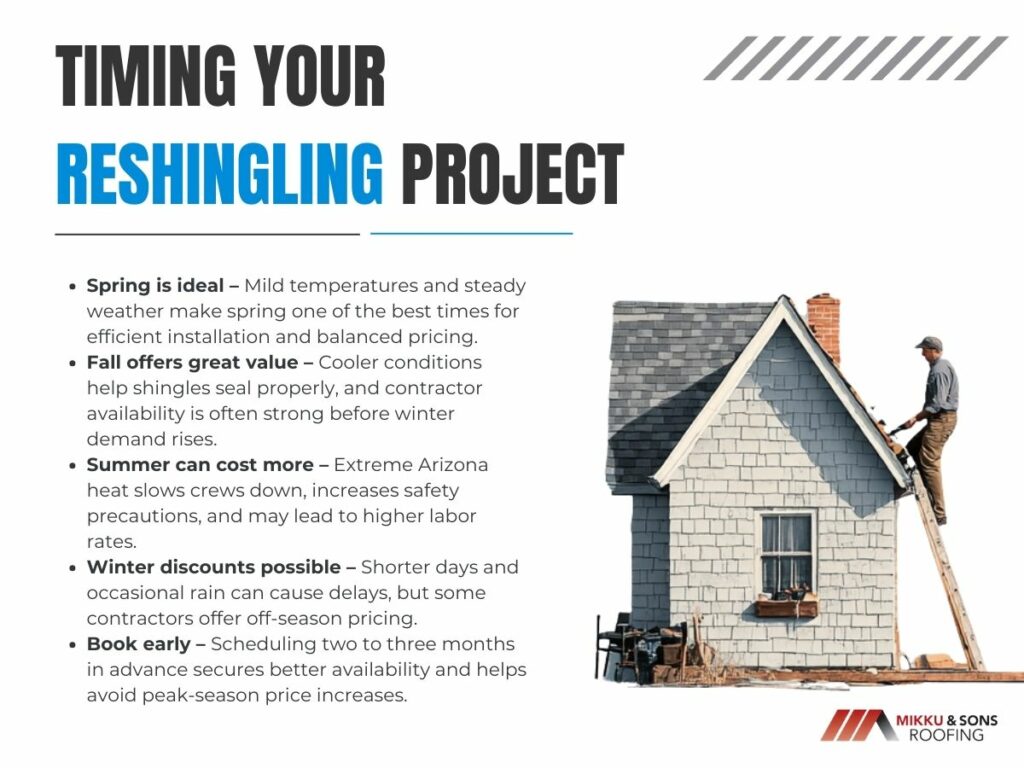
Arizona's unique climate allows roofing projects nearly year-round, but certain seasons offer advantages. Spring and fall are ideal due to milder temperatures. Contractors are more active during these months and may offer promotions to fill schedules.
Summer poses challenges. Extreme heat makes work conditions tough, slowing down progress and increasing labor costs. Some crews charge a premium in July and August to compensate for additional safety measures and reduced efficiency.
Winter is workable in Arizona, but shorter daylight hours and unexpected rain can lead to delays. However, this off-peak period sometimes results in discounted pricing, especially from contractors looking to keep crews busy.
Scheduling in spring or late fall offers the best balance of cost, quality, and timing for Arizona homeowners.
Like any construction sector, roofing has its own supply chain and seasonal surges. Following market conditions can help you make smarter decisions.
For example, asphalt shingle prices often rise after natural disasters elsewhere in the U.S., as manufacturers divert materials to those regions. Demand spikes in areas recovering from hurricanes or tornadoes can lead to shortages even in Arizona.
Similarly, insurance-related work can flood the local market after monsoon season. If many homes need roof repairs at once, you may face longer wait times and fewer available contractors.
Experienced homeowners know to book well in advance ideally two to three months before your desired start date. This ensures you get a reputable contractor rather than being forced to settle due to availability.
Ask roofers about their backlog, recent project timelines, and whether they subcontract. A transparent estimate and timeline protect you from price hikes or sudden reschedules. Early planning reduces surprises and positions you to negotiate better terms.
If you're planning to sell your home within a few years, timing your reshingling project right can also boost resale value. A fresh roof completed in spring or fall shows better during real estate showings and inspections.
Buyers feel more confident when a roof was recently installed by a known contractor, especially when weather was favorable for quality workmanship. Good timing isn’t just about savings it can improve how buyers perceive your entire home.
Arizona homeowners reshingle their homes for many reasons storm damage, aging materials, or planned upgrades. Knowing what influences cost puts you in control of the process. Most homes will fall into the $8,000 to $13,000 range, but your final quote depends on roof size, pitch, materials, and timing.
Requesting multiple estimates is your best strategy for getting a fair price. Ask about tear-off requirements, permit fees, and warranty coverage upfront. That way, you can compare apples to apples and avoid mid-project surprises.
If you're weighing roofing options, your next step is knowing how to choose the right contractor. A trusted local expert can explain code requirements, recommend the best shingle type for Arizona heat, and help you time the project for savings.