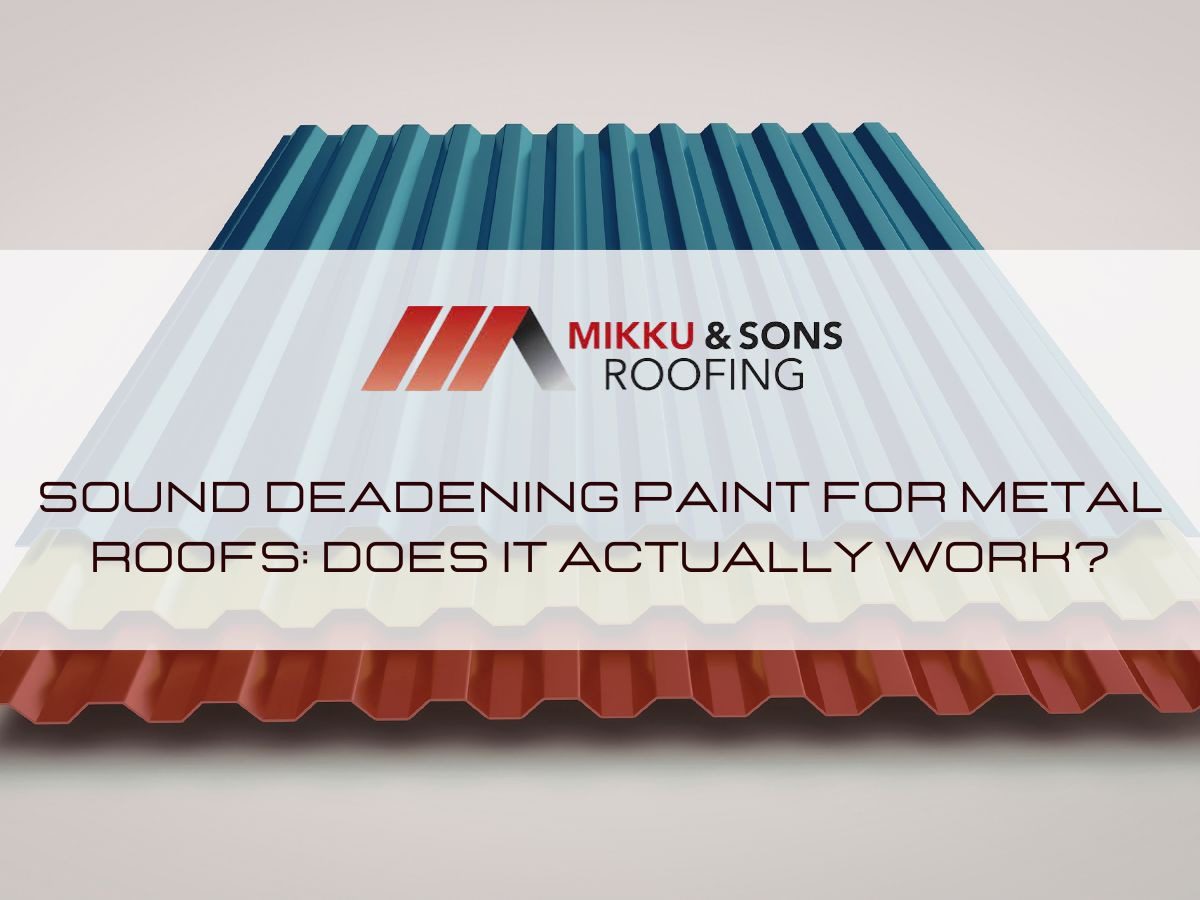
Metal roofs have become a popular choice across the United States because of their durability, energy efficiency, and long service life. Homeowners appreciate that metal roofing systems can last decades longer than traditional shingles while also resisting fire, wind, and harsh weather.
Yet one concern often surfaces after installation: the sound of rain hitting the roof. Many people worry that storms or heavy rainfall may sound louder indoors. This has led to growing interest in specialized coatings marketed as sound deadening paint for metal roof applications.
These paints claim to reduce vibration and dampen noise created when rain strikes metal panels. The key question, however, is whether they truly make a noticeable difference in residential settings. Does sound deadening paint for metal roofs actually work? Let's find out.
Metal roofs often receive a reputation for being noisy, but the reality is more nuanced. In many homes, the level of rain noise depends less on the roofing material and more on how the entire roof structure is built.
A well designed roofing assembly with insulation and proper decking can significantly reduce sound transmission. When those elements are missing or minimal, vibrations from rainfall may travel more easily into living spaces.
The most important factor affecting rain noise is not the metal panel itself but the structure and insulation beneath it.
When raindrops strike a metal roof panel, they create small vibrations across the metal surface. Those vibrations move through the panel and into the underlying components of the roof.
If the metal panels are installed over solid decking with insulation below, much of the vibration energy is absorbed before it reaches the interior of the home. If the panels are attached to open framing with little insulation, sound waves can travel more freely through the structure.
The path of the sound usually follows a simple chain. Rain impacts the metal surface, causing the panel to vibrate. The vibration transfers to roof fasteners and framing components.
From there, the sound moves into the attic space and eventually reaches ceilings and walls inside the house.
Several structural conditions can increase how loud rain sounds inside a building, and most of them relate to how the roof system is assembled rather than the metal itself.
Thinner gauge metal panels tend to vibrate more easily when struck by rain or hail. This increased vibration can create sharper, more noticeable noise compared to thicker, more rigid panels.
Metal roofing installed without plywood or OSB decking allows panels to flex more freely. This flexibility increases vibration, which can amplify sound as it travels through the structure.
Insulation plays a key role in absorbing sound waves before they reach interior spaces. When insulation levels are low, more of the vibration and airborne noise passes directly into the home.
Open framing or gaps in the roof structure can create pathways for sound to travel more easily. These openings reduce the barriers that would otherwise help contain or absorb noise.
Roof systems without layers such as drywall ceilings or insulated attic floors provide fewer obstacles to sound transmission. In contrast, finished ceilings help dampen noise before it enters living areas.
The Metal Construction Association noted in its 2022 roofing guidance that properly installed metal roof systems with attic insulation often produce interior noise levels comparable to asphalt shingles, reinforcing that construction quality matters more than the material itself.
Acoustic roof coatings are designed to reduce the vibration that occurs when rain strikes a metal surface. These coatings are applied directly to metal panels and form a thick, flexible layer that absorbs some of the impact energy from rainfall.
Manufacturers often promote these paints as a way to dampen sound while also protecting the roof from weather and corrosion. These coatings are designed to dampen vibration rather than completely block sound from entering the building.
Most sound dampening roof paints rely on elastomeric polymers or rubber like compounds that remain flexible after curing. When a raindrop hits the roof, the flexible coating slightly compresses and absorbs a portion of the vibration energy.
This reduces the amount of resonance traveling through the metal panel.Some products also include ceramic microspheres or insulating fillers. These microscopic particles create tiny air pockets inside the coating, which may help scatter vibration waves and reduce their intensity.
The result is not silence but a reduction in the sharp vibration that metal surfaces sometimes produce during rainfall. Because the coating absorbs part of the impact energy, the panel may resonate less than it would without the coating.
Sound dampening coatings were originally developed for industrial and commercial settings rather than residential homes. Factories often apply vibration dampening coatings to large metal surfaces on machinery or building structures.
Shipping containers, industrial equipment enclosures, and metal storage buildings frequently use these coatings to reduce resonance.The reason they are common in industrial environments is simple.
Large unsupported metal panels tend to vibrate easily, and coatings can help control that vibration. In residential construction, however, the roof typically includes insulation, decking, and interior ceilings that already perform some sound dampening.
Because of this difference, the effectiveness of the coating can vary depending on the building design.
Applying acoustic roof paint usually involves several preparation steps. First, the metal roof surface must be thoroughly cleaned to remove dirt, grease, or oxidation.
Any existing rust may need to be treated before the coating is applied.After cleaning, a primer is sometimes applied to improve adhesion.
The acoustic coating is then sprayed or rolled onto the roof in one or more thick layers. Many products require a curing period during which the coating forms its flexible structure.
Proper coverage is important because the thickness of the coating directly affects its vibration dampening ability.
The effectiveness of acoustic coatings depends on several factors, including roof structure, panel thickness, and the amount of insulation already present. While these coatings can reduce some vibration, they rarely eliminate the sound of rain entirely.
Most homeowners experience modest sound reduction unless the coating is combined with other noise control measures.
Research into vibration dampening materials has shown that coatings can reduce resonance in metal surfaces. A 2019 acoustic evaluation by the National Research Council Canada examined vibration damping coatings applied to metal panels.
The study found that these coatings lowered resonance levels but did not completely remove impact noise caused by rainfall. The findings suggest that coatings work best when used alongside structural sound barriers such as insulation or solid decking. When used alone, the improvement may be noticeable but limited.
In many residential situations, the coating may soften the sharpness of rain impact rather than dramatically lowering the overall noise level. The difference may be subtle during light rain but slightly more noticeable during heavier storms.
Because human perception of sound varies widely, some homeowners report meaningful improvement while others notice little change. This difference often depends on how the roof was originally constructed.
| Noise Reduction Method | Typical Effectiveness | Best Use Case |
| Sound deadening roof paint | Low to moderate | Minor vibration reduction |
| Attic insulation upgrades | High | Residential homes |
| Solid roof decking | High | New construction |
| Acoustic underlayment | Moderate to high | Metal reroofing projects |
This comparison highlights an important point. Acoustic paint can help reduce vibration, but structural improvements often provide a larger impact on indoor noise levels.
Although coatings may not completely eliminate roof noise, they can still provide value in certain situations. Buildings with large exposed metal panels may benefit more from vibration dampening than traditional homes with insulated attics.
Acoustic coatings tend to work best on structures with thin metal panels or limited insulation.
There are several types of buildings where sound dampening roof paint may provide noticeable benefits.
In these situations, the coating helps reduce the resonance that occurs when rain hits a wide, unsupported metal surface. Even a small reduction in vibration can make these spaces feel quieter.
In residential homes with well insulated attics, the coating may have limited impact on interior noise. Most sound reduction in these buildings comes from insulation and structural barriers rather than surface coatings.
If a home already has thick attic insulation and drywall ceilings, the metal roof above it may not contribute much noise to the living space in the first place. Applying an acoustic coating in these situations may produce minimal change.
Another scenario where coatings may not help significantly is when the roof panels are already installed over solid decking. The decking itself often reduces vibration enough that additional dampening from paint becomes less noticeable.
Because coatings alone rarely solve noise concerns, many roofing professionals recommend addressing the entire roof assembly when trying to reduce sound.
Structural improvements often have a greater effect than surface treatments. Insulation, decking, and underlayment layers typically have the biggest influence on how much rain noise reaches the interior of a home.
Insulation is one of the most effective sound barriers inside a roof system. Fiberglass, mineral wool, and cellulose insulation all help absorb airborne sound waves before they reach interior ceilings.
According to the U.S. Department of Energy insulation guidance published in 2021, properly installed attic insulation not only improves energy efficiency but also helps reduce noise transmission between roof structures and living spaces.
Increasing insulation depth can significantly reduce the sound of rainfall inside a home.
Some metal roofs are installed over open framing or purlins rather than solid decking. While this method works well for barns and industrial buildings, it can allow vibrations to travel more easily into the structure.
Installing plywood or oriented strand board decking beneath metal panels creates a solid barrier that reduces vibration and resonance. The decking also provides additional structural support for the roof system.
Roof underlayment sits between the metal panels and the roof deck. Some modern underlayment materials include acoustic properties designed to absorb vibration.
These materials help dampen the sound created when rain impacts the roof surface. When combined with insulation and solid decking, acoustic underlayment can noticeably reduce interior noise levels.
Acoustic roof coatings are often marketed as a simple solution for rain noise on metal roofs, but their real world performance depends on how the roof is constructed. These coatings can reduce vibration and soften the sharp resonance that sometimes occurs when rain hits metal panels.
However, they rarely act as a complete noise barrier on their own. In most residential homes, the biggest improvements come from insulation, roof decking, and underlayment systems working together to absorb sound.
Understanding how each layer of a roof contributes to sound control helps homeowners make informed decisions before investing in specialized coatings. When evaluating noise concerns, it is helpful to consider the entire roofing structure rather than focusing on a single product.
For those still dealing with noticeable rainfall noise indoors, the next step involves exploring practical installation strategies and design choices that directly address the sound of rainfall itself, which leads naturally to the topic of how to reduce rain noise on a metal roof and the construction methods that make the greatest difference.