
Yes, poor attic ventilation can cause mold. When warm, moisture-laden air becomes trapped in an attic with inadequate airflow, it condenses on cooler surfaces like roof decking and rafters, creating the damp conditions mold needs to grow. Over time, this hidden moisture can quietly spread mold, weaken structural materials, and even affect the air quality inside your home.
Can poor attic ventilation cause mold? In the rest of the article, we’ll cover how attic ventilation works, why moisture builds up, the warning signs of mold, and practical solutions to improve airflow. You’ll also find prevention tips, maintenance best practices, and guidance on when to call a professional to protect your home from costly mold damage.
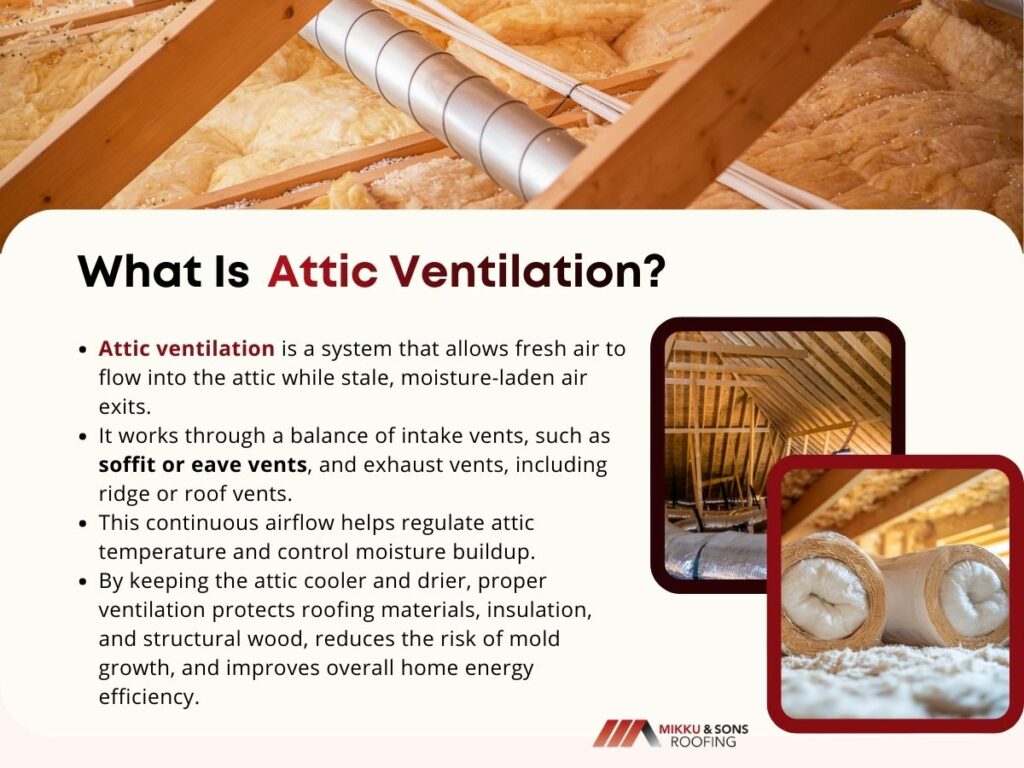
Attic ventilation is the system that allows fresh air to enter and stale, moisture-laden air to exit your attic. It typically works through a balance of intake vents (like soffit or eave vents) that bring in cool outside air and exhaust vents (such as ridge or roof vents) that let warm, humid air escape.
This steady airflow helps regulate temperature and control moisture in the attic. By keeping the space cooler and drier, proper ventilation protects your roof, insulation, and structural wood from damage, reduces the risk of mold, and improves your home’s overall energy efficiency.
Poor attic ventilation traps heat and moisture, creating the perfect environment for mold to develop. Without proper airflow, damp conditions persist, allowing mold spores to settle, grow, and spread throughout the attic.
Everyday household activities release moisture that rises into the attic. When ventilation is inadequate, this moisture has nowhere to escape and becomes trapped, soaking into insulation and wood and creating ideal conditions for mold growth.
Warm, humid air in a poorly ventilated attic meets cooler roof surfaces and forms condensation. This repeated moisture buildup keeps rafters and roof decking damp, allowing mold colonies to take hold and expand.
Without proper ventilation, heat becomes trapped in the attic, especially during colder months. This leads to uneven temperatures that can cause snow on the roof to melt and refreeze, forcing water into the attic and increasing moisture levels.
Moisture trapped in the attic can saturate insulation, reducing its ability to regulate temperature and humidity. Damp insulation not only loses efficiency but also becomes a breeding ground for mold and mildew.
Poor ventilation allows airborne contaminants, including mold spores, dust, and organic particles, to remain suspended in the attic. These particles settle on damp surfaces and provide the nutrients mold needs to grow.
When moisture lingers due to poor airflow, wooden beams, rafters, and roof sheathing begin to absorb water. Over time, this weakens the structure and encourages mold to grow deep within the materials.
Poor attic ventilation allows moisture, heat, and airborne particles to accumulate, creating the ideal environment for mold. By improving airflow and controlling humidity, homeowners can significantly reduce the risk of mold and protect the integrity of their homes.
Mold grows in attics because the space often traps moisture and warm air, especially when ventilation is poor. When these conditions combine, they create an ideal environment for mold to develop and spread.
When moisture, warmth, and organic materials combine in a poorly ventilated attic, mold can easily take hold. Controlling humidity and improving airflow are the best ways to stop mold before it starts.
Mold in the attic can often go unnoticed until it causes damage or affects indoor air quality. Recognizing the early warning signs can help you address the problem before it spreads and leads to costly repairs.
A persistent, stale, or earthy smell coming from the attic is often the first indication of mold. Even if you can’t see it, this odor signals moisture and potential mold growth behind walls or in hidden areas.
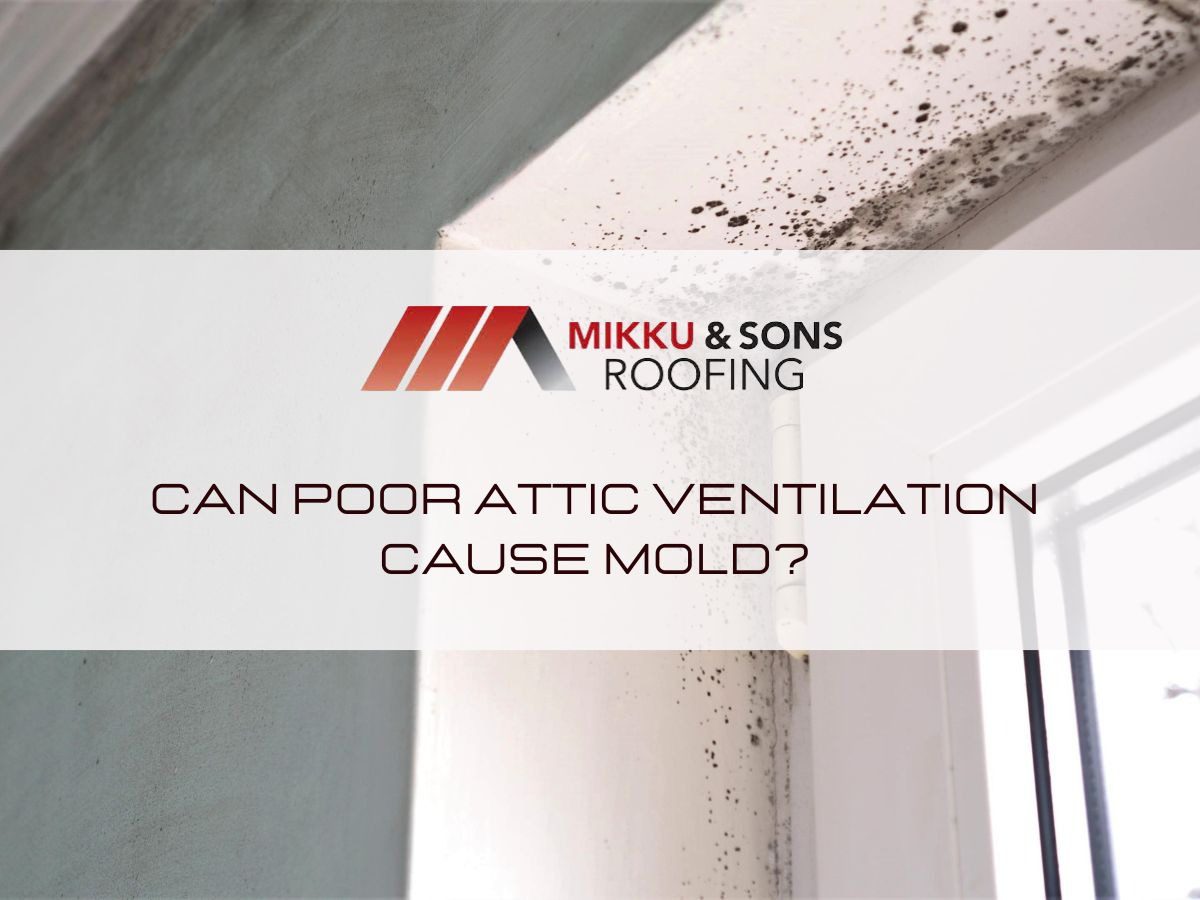
Black, green, or white spots on rafters, beams, or roof decking indicate mold colonies forming. These discolorations often appear where moisture has been trapped over time.
Wet, clumped, or discolored insulation shows that moisture is accumulating in the attic. Damp insulation not only reduces its effectiveness but also provides a breeding ground for mold.
Excessive moisture in the attic can cause metal components to rust or corrode. Rusty nails, brackets, or HVAC components can be a sign of long-term humidity problems that support mold growth.
Stains, discoloration, or watermarks on ceilings or upper walls may indicate leaks or condensation from the attic. These signs often accompany mold growth in the underlying structure.
Increased allergies, coughing, sneezing, or respiratory irritation in household members can signal airborne mold spores from the attic. While not definitive, these symptoms combined with other signs suggest a mold problem.
Identifying these signs early can prevent mold from spreading and causing structural or health issues. If any of these indicators appear, inspecting your attic or contacting a professional is crucial to address the problem promptly.
Fixing poor attic ventilation is essential for controlling moisture, preventing mold, and protecting your roof. A well-ventilated attic allows fresh air to enter and stale, humid air to escape, keeping the space dry and balanced.
Soffit vents allow cool, fresh air to enter the attic from the eaves. If they are missing or blocked, adding or clearing them will greatly improve airflow and reduce moisture buildup.
Ridge and roof vents allow warm, moist air to escape from the top of the attic. When paired properly with intake vents, they create continuous airflow that helps regulate temperature and humidity.
Gaps around light fixtures, attic hatches, and ductwork allow moist indoor air to rise into the attic. Sealing these openings keeps humidity from entering and reduces the strain on your ventilation system.
Insulation should never cover soffit vents, as this prevents fresh air from entering. Using baffles or vent chutes helps keep air pathways open while maintaining proper insulation coverage.
Powered or solar attic fans can help remove excess heat and moisture when natural airflow is not enough. They work best when there is adequate intake ventilation to replace the air being exhausted.
Improving attic ventilation requires a balance of fresh air intake, proper exhaust, and sealed air leaks. When these elements work together, your attic stays dry, energy-efficient, and protected from mold and moisture damage.
Good attic ventilation keeps moisture under control, protects your roof, and helps prevent mold. These simple tips can improve airflow and keep your attic in a healthier condition.
Following these tips will help your attic stay dry, cool, and well-ventilated. Consistent maintenance and proper airflow are key to preventing mold and long-term structural damage.
While proper ventilation is essential, other strategies can further reduce the risk of mold and moisture damage in your attic. Combining these measures with good airflow helps create a healthier, longer-lasting home environment.
Leaky ducts can release warm, humid air into the attic, increasing moisture levels. Sealing these leaks ensures that conditioned air stays in your living spaces and prevents excess humidity from building in the attic.
Vapor barriers installed in the attic or between living spaces can block moisture from rising into the attic. This helps reduce condensation on roof surfaces and keeps insulation dry.
Ensure all vents from bathrooms, kitchens, and laundry rooms exhaust directly outside instead of into the attic. This prevents unnecessary moisture from entering the attic space.
Even small leaks can introduce significant moisture and encourage mold growth. Regularly inspect the roof and repair damaged shingles, flashing, or gutters to keep water out.
Properly installed and dry insulation regulates temperature and reduces condensation. Replace wet or compressed insulation to maintain effectiveness and prevent mold from developing.
Preventing mold in the attic goes beyond ventilation alone. By controlling moisture sources, sealing leaks, and maintaining insulation, you can significantly reduce the risk of mold and protect your home’s structure and indoor air quality.
Yes, poor attic ventilation can cause mold. Trapped heat and moisture create the ideal environment for mold to develop, which can damage wood, insulation, and roofing materials while also affecting the air quality in your home. Recognizing the signs early and understanding the risks is essential for protecting your attic and living spaces.
Addressing poor ventilation through proper airflow, sealing leaks, and maintaining insulation, combined with other moisture-control measures, can effectively prevent mold growth. Regular inspections and maintenance ensure your attic remains dry, healthy, and structurally sound, safeguarding your home from long-term damage.