Properly disposing of old roofing materials starts with correctly identifying the waste, safely removing it from the structure, and ensuring it is sorted and delivered to the appropriate recycling or disposal facility. Doing this properly not only keeps the project site safe and organized but also helps reduce environmental harm and ensures compliance with local regulations.
This article also briefly covers the main types of roofing waste, safe removal practices, recycling options, professional disposal services, local regulations, environmental impacts, and cost considerations to guide a responsible roofing project from start to finish. Let's look at how to dispose of old roofing material properly.
Roofing replacement projects generate a variety of materials, and understanding what you are dealing with is the first step toward proper disposal. Each type of roofing waste requires different handling, recycling, or disposal methods to ensure safety and environmental compliance.
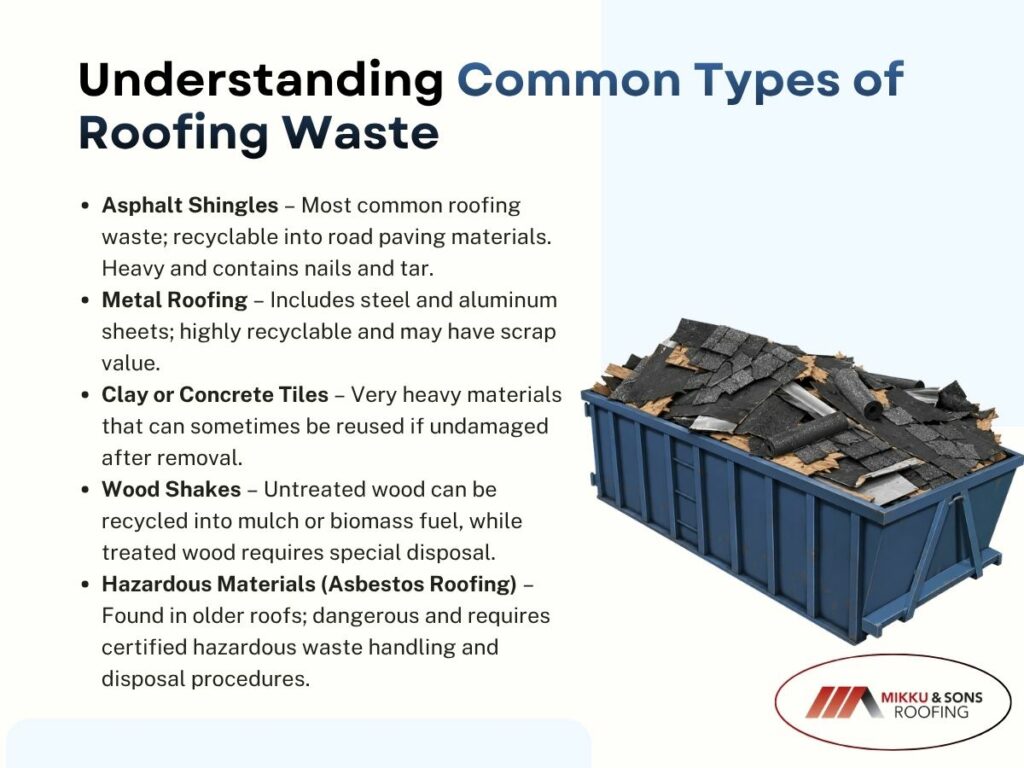
These are the most common roofing waste and are often recyclable into road paving materials. They are heavy and usually contain nails and tar, requiring careful handling.
Metal sheets such as aluminum or steel are highly recyclable and often have scrap value. They must be separated from other debris like wood or insulation before disposal.
Clay or concrete tile materials are very heavy and can often be reused if they remain intact after removal. Broken pieces are typically sent to construction waste or used as fill material.
Untreated wood shakes can sometimes be recycled into mulch or biomass fuel. However, treated wood must be disposed of properly due to chemical coatings.
Older roofs may contain asbestos, which is highly dangerous and requires certified hazardous waste removal. It should never be mixed with regular construction debris.
Understanding these waste types helps ensure proper sorting, safer handling, and more efficient recycling or disposal. Proper classification at the start also reduces costs and prevents environmental harm during the roofing cleanup process.
Safe removal and proper on-site handling of roofing materials are essential for preventing accidents, minimizing environmental impact, and keeping the worksite organized. Following structured procedures ensures that debris is managed efficiently from the roof down to final disposal.
Workers should always wear Proper Protective Equipment (PPE) such as gloves, safety goggles, hard hats, and dust masks when handling roofing materials. This protects against sharp objects, dust exposure, and falling debris.
Place tarps or protective sheeting around the base of the structure to catch falling materials. This helps contain debris and makes cleanup faster and more organized.
Separate shingles, metal, wood, and other materials into designated piles or containers. Early sorting improves recycling efficiency and reduces disposal costs.
Roofing nails, broken tiles, and metal edges can cause injuries if not handled properly. Using magnetic rollers and proper containers helps reduce these risks.
Dumpsters and bins should not be filled beyond their capacity to prevent spills and transport hazards. Proper load management also ensures compliance with hauling regulations.
Proper on-site handling not only improves safety but also makes the entire disposal process more efficient. When materials are managed correctly from the start, recycling becomes easier and overall project cleanup is significantly reduced.
Recycling roofing materials is one of the most effective ways to reduce construction waste and lessen environmental impact. Many common roofing components can be repurposed or processed into new materials instead of ending up in landfills.
Old asphalt shingles can be processed and reused in road construction and asphalt paving. This reduces landfill waste and helps conserve raw materials used in road projects.
Metal roofing materials such as steel and aluminum are highly recyclable and retain significant scrap value. They are melted down and reused in manufacturing new metal products.
Intact tiles can often be cleaned and reused in new roofing or landscaping projects. Broken pieces are sometimes crushed and used as fill or base material in construction.
Untreated wood shakes can be chipped into mulch or used as biomass fuel. However, chemically treated wood must be processed carefully and may not always be recyclable.
Some recycling centers specifically handle mixed construction debris, including roofing waste. These facilities sort and process materials to maximize recovery and reduce landfill disposal.
Recycling roofing materials helps lower disposal costs, reduces environmental strain, and supports sustainable construction practices. Choosing the right recycling method ensures that valuable materials are reused instead of wasted.
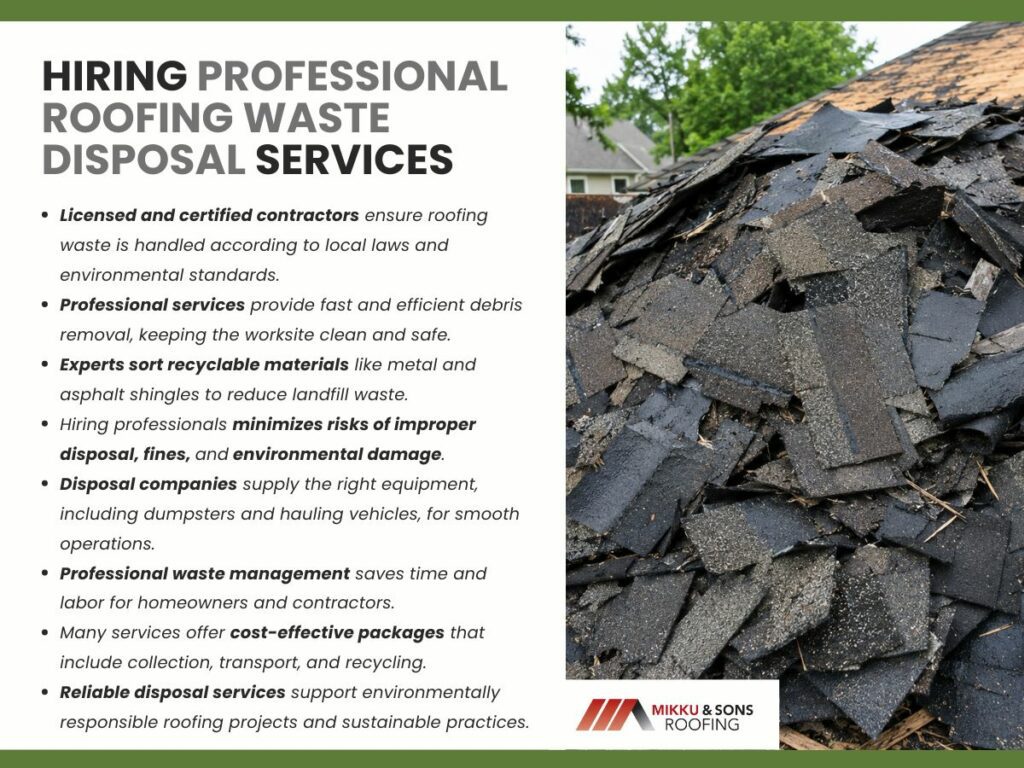
Hiring professional roofing waste disposal services is often the most efficient and compliant way to manage large amounts of roofing debris. These services handle collection, sorting, transport, and proper disposal, saving homeowners and contractors time and effort.
Overall, professional disposal services provide a reliable and hassle-free solution for managing roofing waste. They ensure safety, compliance, and efficiency while supporting environmentally responsible disposal practices.
Understanding and following local regulations for roofing waste disposal is essential to avoid penalties and ensure environmentally responsible practices. These rules vary by location and often dictate how materials must be sorted, transported, and disposed of.
Following local regulations helps ensure that roofing waste is handled safely, legally, and responsibly. Compliance not only avoids fines but also supports broader environmental protection efforts.
Improper disposal of roofing waste can cause significant environmental harm, affecting soil, water, air quality, and overall ecosystem health. Understanding these impacts highlights why responsible handling and disposal are essential.
Roofing materials are heavy and bulky, quickly filling up landfill space. This increases waste management pressure and reduces available disposal capacity for other materials.
Chemicals from roofing materials, such as asphalt or treated wood, can leach into the ground. This may contaminate soil and nearby water sources over time.
Burning roofing debris releases toxic fumes and particulate matter into the air. This contributes to air pollution and poses health risks to nearby communities.
Throwing away recyclable materials like metal or asphalt wastes valuable resources. This increases demand for new raw materials and further environmental strain.
Improperly dumped roofing waste can harm animals and damage natural habitats. Sharp debris and chemical exposure can threaten local ecosystems.
Improper roofing waste disposal has wide-ranging environmental consequences that extend beyond the construction site. Responsible management helps protect natural resources and supports long-term environmental sustainability.
Proper budgeting for roofing waste disposal is an important part of any roofing project, as costs can vary depending on materials, volume, and disposal methods. Planning ahead helps avoid unexpected expenses and ensures efficient waste management from start to finish.
Careful cost planning helps manage roofing waste disposal efficiently and prevents budget overruns. Considering material type, volume, transport, and recycling options ensures a more accurate and sustainable project budget.
Proper disposal of old roofing materials is an essential part of any roofing project, helping ensure that waste is managed safely, legally, and in an environmentally responsible way. Every stage - from identifying materials to safe removal and selecting appropriate disposal or recycling methods - contributes to a cleaner and more efficient process.
In the end, good planning, compliance with local regulations, and choosing sustainable options such as recycling or professional disposal services can help reduce both costs and environmental impact. Handling roofing waste correctly from start to finish supports safer job sites and promotes long-term environmental sustainability.