
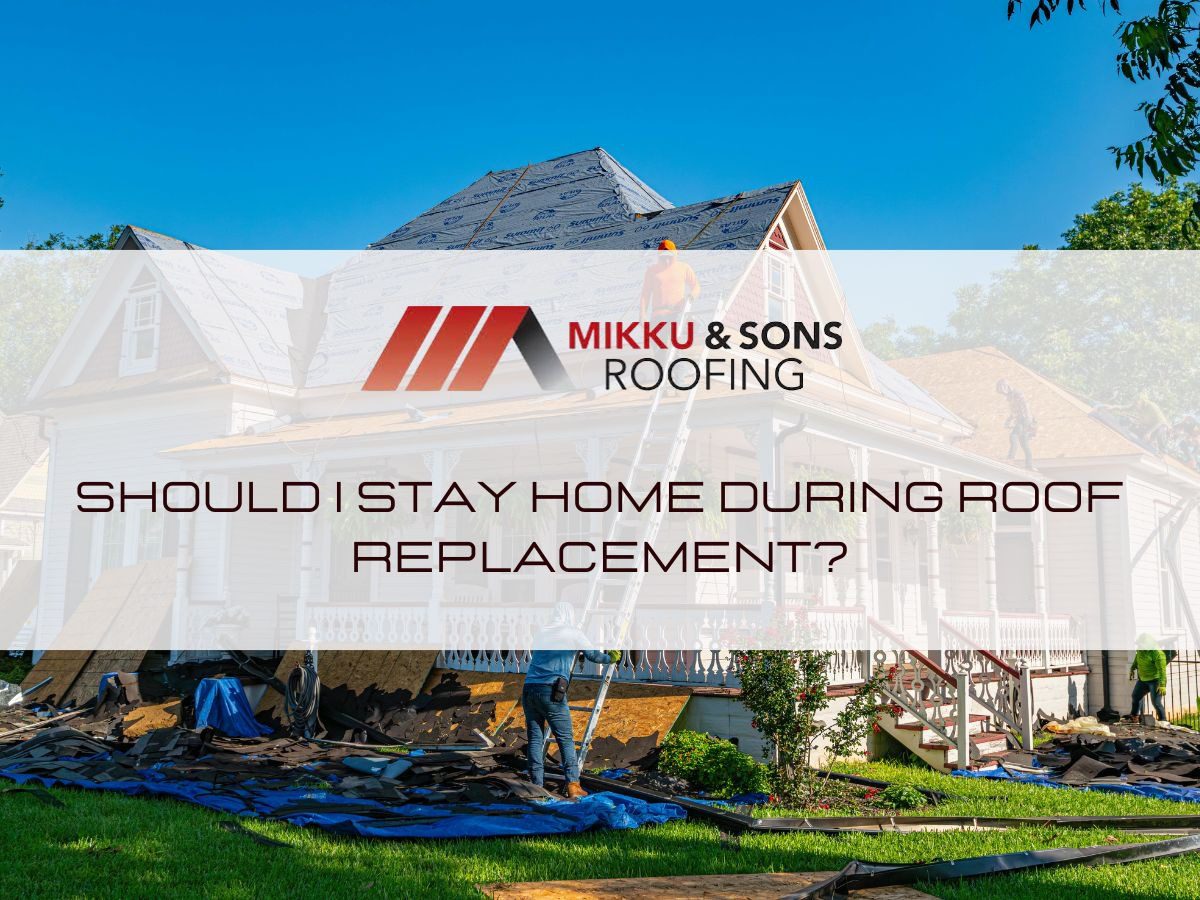
If you are planning a new roof, one of the first questions that comes to mind is simple and practical: should I stay home during roof replacement? The short answer is that it depends on your tolerance for noise, your household situation, and the scope of the project. Many homeowners choose to leave for part or all of the day because roof replacement is loud, disruptive, and sometimes unpredictable. Others stay home with preparation and clear communication with the contractor.
This guide walks through what actually happens during a roof replacement, the risks and inconveniences involved, and how to decide what works best for your family.
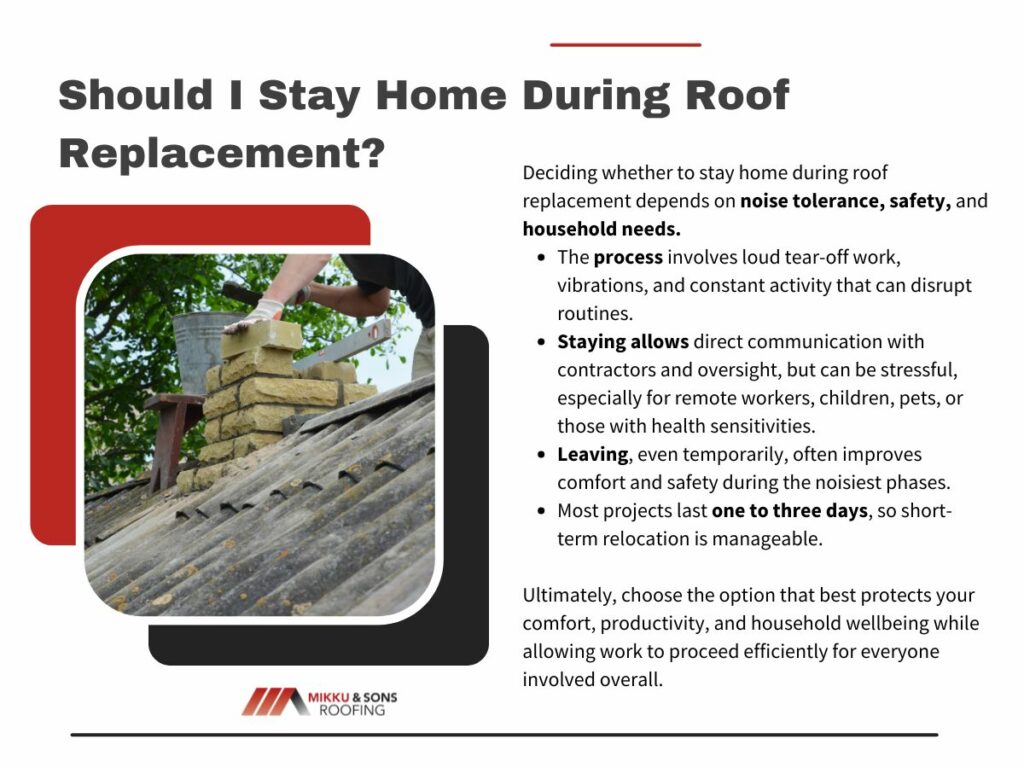
A roof replacement is not a quiet, gentle home improvement project. It involves tearing off old materials, inspecting the decking, making repairs if needed, and installing new underlayment and shingles. The process is active, physical, and noisy from start to finish.
Understanding the stages of a roof replacement helps you decide whether being home will feel manageable or overwhelming. Most residential projects in the United States take one to three days, depending on the size of the home and weather conditions.
The first step is removing old shingles and underlayment. Roofers use pry bars and specialized tools to strip the roof down to the decking. During this phase, debris is tossed into dumpsters placed near the home.
This is typically the loudest and most jarring stage. The banging, scraping, and thudding vibrations can travel through walls and ceilings. If you work from home, have small children, or are sensitive to noise, this period can be particularly uncomfortable.
Once the old material is removed, contractors inspect the plywood or boards beneath. If they find water damage or rot, sections are replaced before new materials go on.
This stage is less noisy but still active. If repairs are extensive, the project may take longer than originally planned. Staying home during this part is usually manageable, though the disruption continues.
Installing new underlayment and shingles brings back bursts of noise, especially from nail guns. There will also be workers walking across the roof, which creates vibrations.
While this phase feels more structured, it still involves consistent sound and movement overhead. Pets and young children often react strongly to this stage.
Staying home is not automatically a bad decision. In fact, some homeowners prefer to remain present for practical or personal reasons.
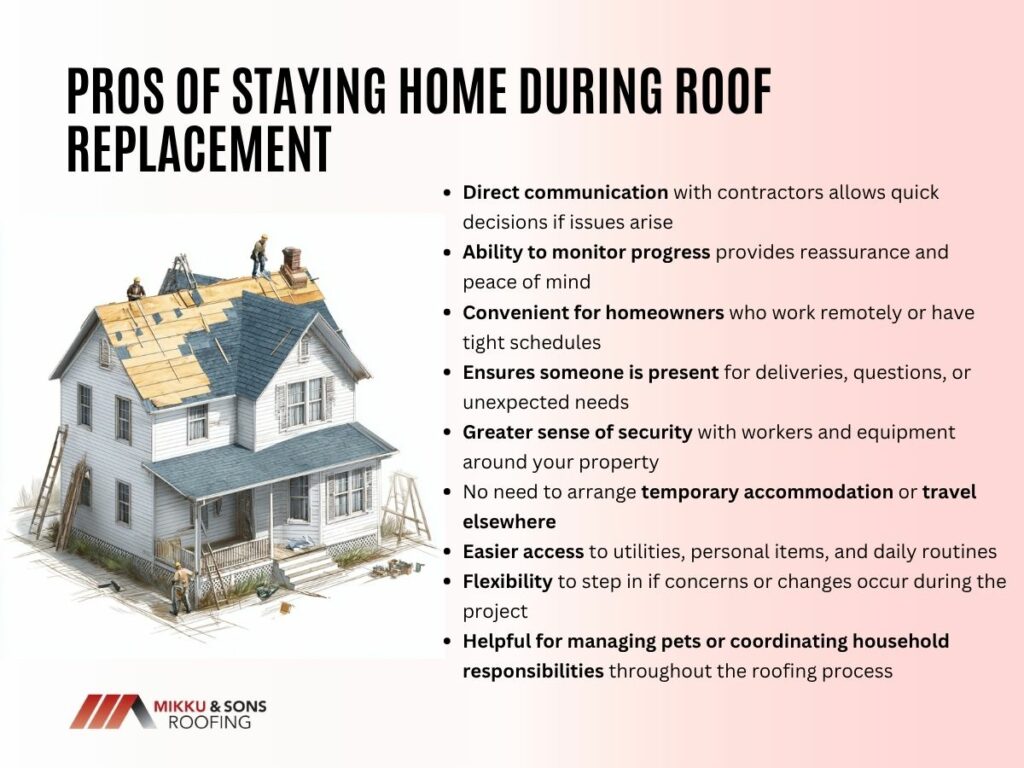
Being home allows you to monitor progress and communicate directly with the roofing crew if questions arise. That sense of oversight can provide peace of mind.
First, there is convenience. If you work remotely or have responsibilities that keep you nearby, leaving for several days may not be realistic. You may also want to ensure access to utilities or keep an eye on deliveries.
Second, being home makes it easier to answer contractor questions. Occasionally, roofers uncover hidden damage that requires approval before proceeding. Quick decisions can prevent delays.
Third, security matters. Although reputable roofing companies maintain strong safety standards, some homeowners simply feel more comfortable knowing someone is present.
However, staying home comes with tradeoffs that should not be underestimated.
Roof replacement is physically disruptive to your living environment. Even if the project goes smoothly, the experience can feel intense.
The noise level alone is often enough to make homeowners reconsider staying home for the full duration of the project. Nail guns, hammering, scraping, and constant foot traffic overhead can be exhausting.
Vibrations are another factor. Items on walls may shift slightly. Dust can fall from attic spaces. If you have fragile decor or open shelving, you may need to secure those items in advance.
There is also the safety consideration. Roofing projects involve heavy materials, falling debris, and equipment placed around the perimeter of your home. Children and pets require extra supervision to prevent accidents.
For households with newborns, elderly residents, or individuals with medical sensitivities, temporary relocation is often the more comfortable option.
Roof replacement changes the environment around your home, both inside and outside. Driveways may be blocked, landscaping partially covered, and debris scattered.
If you have pets or young children, leaving the house during peak construction hours may be the safest and least stressful option.
Dogs often react strongly to unfamiliar noise and strangers moving overhead. The vibrations can cause anxiety or escape attempts. Cats may hide for extended periods, which can complicate supervision.
For children, the constant sound can disrupt naps and routines. Additionally, contractors may need access to certain areas around the home. Keeping kids indoors and away from work zones requires vigilance.
A simple solution is to arrange daytime childcare or take pets to a boarding facility during the loudest phases. Even spending part of the day elsewhere can significantly reduce stress.
Roofing materials and adhesives can emit mild odors during installation. While modern products are designed to meet safety standards, the smell can be noticeable inside the home.
According to the Occupational Safety and Health Administration in its 2023 construction safety guidance, ventilation is important during roofing work to minimize exposure to airborne particles and fumes.
If you suffer from migraines, asthma, or sensory sensitivities, the combination of noise, vibration, and odor can become overwhelming.
Here is a comparison to help weigh comfort factors:
| Home Situation | Staying Home | Leaving Temporarily | Best Choice |
| Remote worker needing quiet | Noise disrupts calls and focus | Quiet elsewhere improves productivity | Leave during peak hours |
| Household with infants | Naps interrupted | Routine maintained off site | Leave during tear off |
| No pets or children | Manageable with preparation | Optional | Personal preference |
| Health sensitivities | Odors and vibration may aggravate symptoms | Reduced exposure | Leave |
Every home is different, but evaluating your daily routine is essential before making a decision.
Some homeowners do choose to stay home, either by necessity or preference. If that is your plan, preparation makes a big difference.
Taking simple precautions before the crew arrives can dramatically reduce stress and protect your belongings.
Communication with your contractor is key. Ask about start times, expected loud phases, and break periods. Many roofing companies are willing to give realistic daily timelines.
There are situations where leaving is strongly recommended rather than optional.
If you or someone in your household works night shifts, has medical vulnerabilities, or cannot tolerate prolonged noise, temporary relocation is usually the better choice.
Hotels, short term rentals, or staying with family for one or two days can preserve your well being. Even planning to leave during the tear off phase and returning later can strike a good balance.
Weather can also influence your decision. If a sudden storm interrupts the process, contractors may work quickly and intensively once conditions improve. That can increase stress for anyone inside the home.
In most standard roof replacement projects, homeowners insurance does not cover temporary lodging unless the home becomes uninhabitable. According to a 2022 Insurance Information Institute overview of homeowners policies, additional living expenses are typically tied to covered losses such as fire or severe storm damage.
If your roof replacement is part of a major claim after significant storm damage, ask your insurer whether lodging reimbursement applies. Otherwise, leaving the home is usually a personal expense.
Budgeting for one or two nights away may still be worthwhile if it protects your peace of mind and family comfort.
Most asphalt shingle replacements on average sized homes are completed in one to three days. Larger or more complex roofs can take longer.
Metal or tile roofing projects may extend beyond that timeframe due to installation complexity. Weather delays can also add extra days.
Before deciding, request a detailed timeline from your contractor. Clear expectations reduce frustration and help you plan accordingly.
At its core, the question of should I stay home during roof replacement is less about rules and more about lifestyle fit. If your home environment can tolerate loud, persistent construction noise for several days, staying may be manageable. If comfort, safety, or productivity will suffer, stepping away temporarily is often the wiser decision.
The best choice is the one that protects your household’s safety and sanity while allowing the roofing crew to work efficiently. Some homeowners split the difference by leaving during the noisiest hours and returning in the evening.
A new roof is a major investment in your home’s protection and value. Once complete, it shields everything beneath it for decades. In a future guide, we will explore how to choose the right roofing material for long term durability and energy efficiency, so you can pair smart installation decisions with the comfort choices you make during construction.