40% of global greenhouse gas emissions can be attributed to the built environment, which is a very concerning figure. It uses one-third of the world's resources and produces millions of tonnes of garbage annually.
Changing to a more sustainable way of living is not an easy decision, and it requires time. If you're a homeowner concerned about your home's environmental impact, using the most eco-friendly roof would be one of the options on your table.
It's safe to assume that if you're interested in green roofing materials, you've already taken steps toward a more sustainable home and way of life. Here is a rundown of which type of roofing has the smallest carbon footprint and why.
The carbon footprint of a roof is the entire amount of greenhouse gases (GHG) emitted by the roof expressed as carbon dioxide equivalent (CO2e). The carbon footprint of a roof is determined by the direct or indirect carbon emissions involved with the manufacture of the roofing materials to their installation on the roof.
Life cycle analysis (LCA): Why it is important
Decision-makers can use LCA to evaluate competing products such as roofing materials and choose the one with the smallest environmental footprint. By considering all aspects of a product's life cycle, LCA prevents burden shifting, which would lessen the environmental impact in one area while raising it in another.
LCA evaluates the entire lifecycle of a product, beginning with its raw material extraction and ending with its final disposal. It's a way to measure the cumulative effects of a product, process, or action on the environment.
LCA pinpoints environmental problem areas in products and materials and provides a baseline for future improvements. Examining the few criteria that qualify it as a roof with a small carbon footprint is necessary for determining which roof has the lowest direct or indirect carbon emissions.
It is important to consider a number of aspects when choosing a roofing material to minimize its effect on the environment. These include:
| Material | Embodied Energy (MJ/Kg) |
| Copper | 44-55 |
| Aluminum | 155 |
| Clay tiles | 6.5 |
| Concrete tiles | 1.2 |
| Ceramic tile | 18.9 |
| Slate | 0.1-1 |
| Steel – corrugated sheet | 79.6 |
| Clay brick | 3.5 |
This is the amount of energy needed to extract, process, and transport the material and deal with waste produced during production. Energy is consumed throughout the construction process, from mining and processing raw materials to the production of building supplies, distribution, and, ultimately, construction itself.
If you want to cut down on your home's energy use and your carbon footprint, you should learn about and factor in embodied energy while making decisions concerning construction or renovation.
Aluminum roofing raises a few eyebrows since the embodied energy varies greatly with different manufacturing methods. Aluminum, which is manufactured in vast quantities through electrolysis, is an example of a material that would have been considered environmentally unfavorable in the past.
Since most of its production relies on hydroelectric power, the amount of energy required to make it is quite small. It's a great sustainable roofing alternative because it lasts a long time and can be recycled when it's done.
| Material | Life expectancy |
| Clay tile | 50 to 100 years |
| Concrete tile roofs | 40 to 75 years |
| Cedar shakes/shingles | 20 to 40 years |
| Composite shingles or tiles | 30 to 50 years |
| Slate | 30 to 100 years |
| Fiber cement shingles | 20 to 30 years |
| Tin | Over 50 years |
| Ribbed metal (with exposed fasteners) | 25 to 40 years |
| Ribbed metal (with concealed fasteners) | 30 to 40 years |
| Standing seam | 30 to 50 years or more |
| Copper and zinc | 100 years or longer |
| Premium asphalt shingles | 20 to 30 years |
| Architectural/ dimensional asphalt shingles | 15 to 25 years |
| 3-tab shingles (properly maintained) | 10 to 20 years |
This is a material's ability to withstand its intended environment throughout its predicted lifespan without incurring damage or requiring excessive care. Over the product's service life, you should calculate its total cost and environmental impact; the lower those numbers will be, the more durable the product is expected to be.
Clay tiles are eco and style-friendly choices for your house. They come in a multitude of colors and styles that you can use to accent or complement your house. Clay tiles are energy efficient, allowing heat to circulate rather than just trapping it, which can lower your energy bill in regards to cooling in hot regions or in the summer months.
Also, while these tiles aren't particularly cheap to install, they are easily replaceable when damaged, meaning there isn't much chance you'll ever need to do a full replacement, only minor repairs and touch-ups throughout the life of your rooftop. Before you invest in these tiles, you'll want to have an inspection done to make sure your roof can handle the weight, additional support structure may need to be added in some cases.
In most cases, the overall savings you'll get with this tile over the long run will likely offset the costs of any work needed.
Boye Fajinmi, Co-Founder and President, TheFutureParty
Recycling refers to reprocessing waste into useable products, while reclamation refers to the process of reclaiming something that had been discarded as useless. Some materials may be recycled more simply than others, and there are recycling centers where they can be sent again for use.
A product's recyclability can be influenced by its design in a number of ways, including the materials used and the degree to which it is constructed in modular parts. The metals steel and aluminum, for instance, can be recycled repeatedly.
If you are environmentally concerned, you can opt for recycled shingles. They can be a green roofing product and are quite affordable. These shingles are perfect alternatives to expensive slate roofs. They are durable and can last for over 50 years.
These roofing materials also help the home use as little energy as possible. These types of roofs can help you save on your monthly bills. Their simple design will allow you to use fewer materials. Such is beneficial to the environment. Most raw materials are organic, sustainable, and eco-friendly. They can reduce waste and carbon footprints. Something that is vital in creating a better world for future generations.
Laura Martinez, Consultant and Content Writer, PersonalityMax
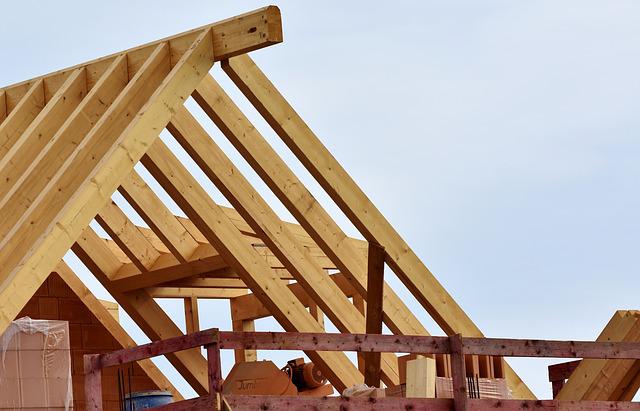
The quest for eco-friendly substitutes has been strong for quite some time. Due to global warming and the subsequent need for improved materials that can endure the destructive elements of nature, the demand for sustainability has skyrocketed.
If a green or living roof is the extent of your knowledge about sustainable roofing, you may be shocked to learn of the many other options available, even with the current roofing options.
Most contemporary homes have asphalt shingles on their roofs. They may be fixed or replaced with little effort and cost little money.
When most people think about asphalt shingle roofing, the phrase "environmentally friendly" is hardly the first thing that springs to mind. Recently, there has been a shift in residential construction toward eco-friendly and sustainable practices, likely as a result of rising public awareness of international issues.
As a byproduct of refining crude oil, asphalt is not the most eco-friendly or long-lasting option. What makes asphalt shingle roofing eco-friendly is often overlooked, even though it is one of the more widely used eco-friendly home components.
You don't have to worry about your old asphalt shingles being dumped in a landfill if you're planning on repairing your roofing system. This is because, with the help of innovation, asphalt shingles may be reused and recycled.
Approximately 11 million tons of asphalt shingle trash is generated annually in the United States, according to the Environmental Protection Agency (EPA). The tear-off procedure for asphalt shingles generates ten million tons of garbage annually, all of which homeowners generate, while the other million are scraps from making the shingles themselves.
Asphalt shingles are not commonly recycled and are not biodegradable, although they are used by some businesses and governments anyway. Materials such as fiberglass, tar, and other petroleum byproducts are combined with paper and minerals to create these.
Considering their dependence on petroleum, they cannot be considered environmentally friendly. The fact that they are derived from fossil fuels makes them unsustainable, and they also have a disintegration time of up to 300 years as well.
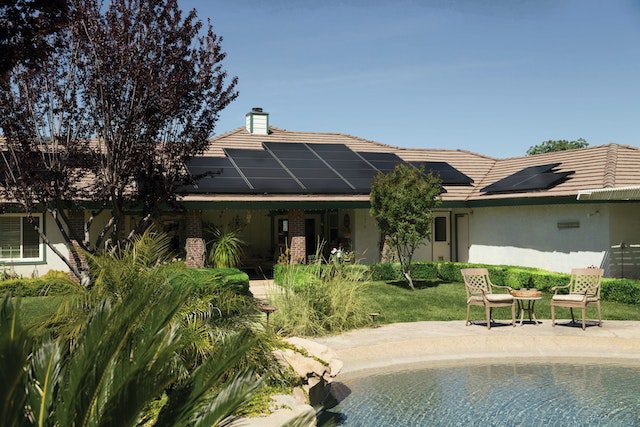
Solar panels are constructed using non-hazardous materials (aluminum, glass, and sand) and have a clean production process. Roofing materials that can be used to generate solar energy include solar panels and tiles.
To generate power, solar roofing systems rely on the sun's rays. It's a green roofing material that can significantly reduce your monthly energy costs.
They both produce no emissions since they use clean, renewable energy sources like the sun. Because of the sun's importance in solar energy production, this type of roof is practical only in sunny climates.
Unlike solar panels, which can be installed on any old roof, solar tiles feature solar cells embedded in more conventional roofing materials like asphalt shingles or metal, which adds up the final carbon footprint of the entire roof from the different materials.
They can also be recycled after they wear out. Glass, metal, and electronic waste recycling are all well-established sectors that may easily handle solar panels and other components of solar power systems.
It is, however, highlighted that the environmental costs associated with producing solar panels may be significant since caustic chemicals like sodium hydroxide and hydrofluoric acid are used in the fabrication process, along with water and energy, the generation of which contributes to greenhouse gas emissions.
Some other roofing methods we have discussed won't work if your home or building has a flat or low-sloped roof. Membrane roofing is a popular option for homes with flat or low-sloped roofs.
EPDM, a synthetic rubber sheet, is widely used to produce roofing membranes. It's sturdy, cheap, light, and simple to set up and fix if something goes wrong. The taped or glued seams mean it only has a 5- to 15-year lifespan and leaks easily.
Membrane roofs are vulnerable to tears because they are so thin, and they are vulnerable to leaks which can occur anywhere, including at the joints where individual membrane sheets are joined.
Roofing membranes made of PVC and TPO are more expensive but last longer than other types. Hot-welded air seams on single-ply roofing membranes make them nearly twice as durable as EPDM rubber, but these membranes are also more expensive to install and buy.
In comparison to PVC, TPO, and asphalt roofs, EPDM roofing has a smaller impact on the environment. EPDM's Global Warming Potential (GWP) is only 6.93 kg CO² per square foot.
While metal roofing isn't usually considered a "green" option, it could end up saving you money and reducing your carbon footprint in the long term. Metal roofs are increasing in popularity due to their many practical advantages and their ability to lessen an individual's impact on the environment.
Traditional roof tiles offer inadequate protection from the elements and heat loss, leading to soaring utility bills. However, metal roofing leaves hardly any carbon impact, can last twice as long as tiles, and is more energy efficient.
The carbon footprint of metal roofing
In recent years, the environmental impact of each roof choice has been a major factor in the decisions of both big businesses and domestic property owners alike. Metals are, however, a great choice for an environmentally friendly roof.
Metal roofing is not only recyclable at the end of its life but also constructed from recycled resources. The time and energy spent mining for raw materials to make this action greatly cuts down new products.
Moreover, it can help cut down on trash that ends up in landfills. Shingles take up to 300 years to degrade in landfills than metal roofs.
The fact that metal roofing is a sustainable, eco-friendly alternative with a very low carbon footprint over the course of its lifetime is one of the most significant advantages associated with making that choice.
Unlike asphalt shingles, metal roofs can be recycled easily; some even contain as much as 40 percent recycled content in their compositions. When the time comes to replace the roof, the metals employed in its construction can be recycled again.
Since metal can be recycled so easily, the mining and processing of new materials release less carbon dioxide. Very little trash is left over, even after a metal roof has been in place for fifty years.

Metal roofing is widely regarded as the most eco-friendly and long-lasting option. Metal roofing may be recycled indefinitely and typically contains 25%-40% recycled content. Many homeowners and homebuyers are placing a premium on eco-friendly living in their house purchases and renovations as a result of rising awareness among customers about the importance of sustainable practices.
Those in the home repair and building industries are looking for reliable alternatives that will fulfill the strictest criteria of eco-friendliness and sustainable living to satisfy the public's need for conservation, recyclability, and sustainability. Even among the most reluctant homeowners and buyers, metal roofing is one of the many green choices for home improvements that are getting a lot of traction.
Since quality metal roofing weighs only about half as much as asphalt roofing, lighter frames can be used in newly constructed homes. On the other hand, asphalt roofs may hold hundreds of gallons of crude oil and, depending on the roof's pitch, need to be replaced every 12 to 20 years.
More and more homeowners are looking for eco-friendly building supplies, but it can be tough to tell which ones are best. Metal roofs have an established track record of exceptional efficiency and durability.
When you choose a metal roof, you won't have to worry about making a replacement decision for at least another 15 years. Because of its adaptability, it can match almost any building design.
This is because it requires hardly any maintenance over its 50-year lifespan.
It holds up well in the face of torrential downpours, gale-force winds, and a barrage of blows.
Metal is an incredibly robust and long-lasting material, standing up well to the elements, rust, wind, and scratches. Its great weather resistance can help you save money on roof repair and maintenance, and its long lifespan means fewer resources used up in production.
Metal roofing has been demonstrated to outlast more conventional materials (such as tiles and shingles) over time. The majority of metal roofs can retain their original state for up to half a century.
Because replacements aren't necessary as often, it's better for the environment than other options because it saves resources.
Metal roofs reflect the most sunlight of any roofing material. Even when painted, the reflecting characteristics of metal roofs aid in reducing the warming impacts of the sun, resulting in a 20 percent savings on cooling expenditures for the average home.
Steel roofs, even when coated to blend in with the exterior of your home, are highly reflective, reducing the amount of heat your roof absorbs from the sun. It has been shown that entire communities can experience a lesser impact from urban heat islands if they have multiple metal roofs.
In addition to its durability, metal roofing is also environmentally friendly because of its low energy use. It will help keep the house cool and make the most of your air conditioning.
Are metal roofs the most eco-friendly option?
Roofs made of metal are quite energy-intensive to produce. They still look nice and last a long time, and many of them are made in part from recycled materials or can be recycled when they finally reach the end of their useful life.
Metal roofs can only be considered so in the long run when talking about eco-friendliness. This is because they have high embodied energies, but once they are installed, they have little carbon footprints, and they can last for long periods of time without replacement. In addition, metal roofs are manufactured with 40%recycled material, and when they need to be replaced, they can be recycled and reused.
While the high heat conductivity of metal makes it effective at reflecting some sunlight and reducing the amount of heat gained by a building's roof, metal roofs nevertheless provide sufficient insulation. Technically speaking, metals are not sustainable because they are forged from earth-mined materials.
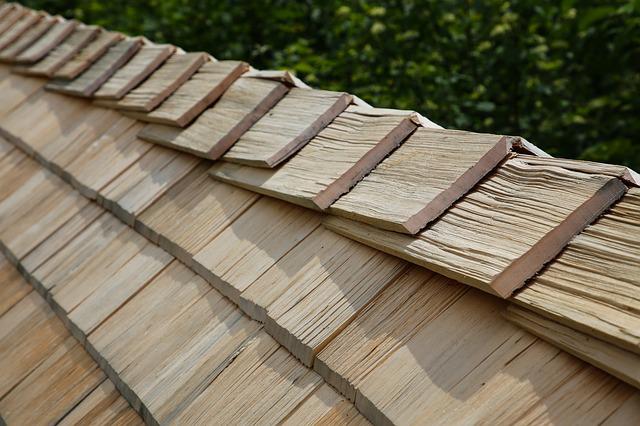
At first glance, wooden shingles might not be the intuitive choice for the ecologically minded, but let's take a deeper look. Not only can timber actively reduce carbon dioxide emissions during growth, but it also makes for a great replacement for more energy-intensive materials like concrete or steel in building, drastically lowering greenhouse gas emissions from that sector of the economy.
As a matter of fact, using timber instead of bricks can cut carbon emissions by an average of ten tonnes, and using timber instead of one cubic meter of concrete can save one tonne of carbon dioxide emissions.
The carbon footprint of timber
Increased demand for trees would result in more trees being planted, reducing carbon in the environment and producing cleaner, safer air. This is only true; however, if the timber industry is sustainable, meaning that for every tree cut down for timber, another tree is planted to maintain a balance.
While it's great that wood is in such high demand, this boon has a potential downside if the carbon emissions from lumber production outweigh the carbon sequestered by forests using wood.
Evaluating the timber industry's potential for cutting down on greenhouse gas emissions requires taking a close look at the carbon footprint of timber products.
Compared to other construction materials, such as concrete, metal, or plastic, timber leaves a much smaller carbon footprint because of the low energy needed to extract the basic ingredients. Planting trees is good for the planet and helps reduce timber's carbon footprint.
Scientists refer to trees as "carbon sinks" because of their ability to absorb carbon from the atmosphere and store it in their wood, plant tissue, and soil. Because of their ability to take in large quantities of carbon dioxide from the air, forests play a crucial part in the global carbon cycle.
The largest contributor to timber's carbon footprint is transportation. Cutting and curing timber and using it in the building requires very little energy and only the most basic equipment. Direct and indirect emissions combine to make up the total for timber transport.
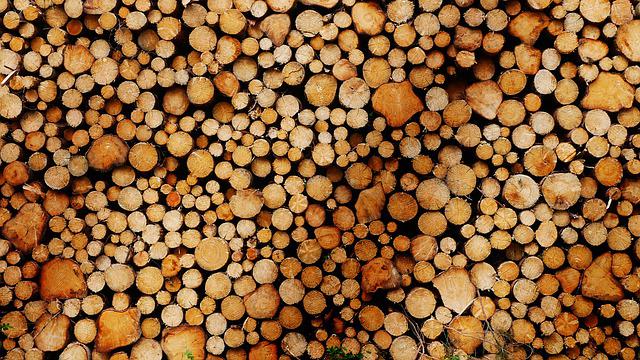
Trucks hauling timber typically consume more fuel than the normal truck since they must travel longer distances through more challenging terrain, such as rural roads, mountainous areas, and graveled forest roads. Timber lorries have a shorter lifespan than regular road haulage vehicles because the rugged terrain greatly strains the engines.
In addition, frequent heavy loads on minor public roads leading to lumber forests cause them to deteriorate quickly and necessitate frequent maintenance. All of these increase the need for timber lorry production and maintenance as well as road maintenance, hence more greenhouse gases are produced by moving lumber.
Using wood shingles has the following advantages:
Cedar's inherent insulating properties come from its "loose" cell structure, making it ideal for use in green roofing. Because your roof is made of natural cedar, it will keep the temperature of your attic lower in the summer and higher in the winter.
Other roofing options necessitate substantial fossil fuel expenditures for both the original acquisition (mining of metals, extraction of oil) and the transformation of raw materials to finished products. For green roofing, the process of turning cedar trees into shingles is time-consuming but not energy-intensive; the trees not only provide oxygen but also remove carbon dioxide from the air and reduce your need for fossil fuels for heating.
Timber has a significantly more sustainable interaction with the carbon cycle than steel or any manufactured building material.
Cities and suburbs often experience warmer temperatures than their more rural neighbors. Most modern building exteriors are highly impermeable and have a low solar reflection. Also, they are typically constructed from high-density materials that take in plenty of heat and give it off slowly.
The urban heat island effect is exacerbated by heat absorption by concrete, asphalt, and other paving materials, although green roofs can mitigate this problem. A green roof consists of a synthetic waterproof membrane and a growing medium, typically soil and inorganic materials.
By transforming rooftops into veritable gardens, living roofs provide homeowners with a novel and environmentally responsible roofing choice. Green roofs, often called living roofs, are roofs covered in grass or other vegetation, preferably indigenous species, and can range from being completely grass-free to being completely overgrown with vegetation.
Green roofs have several advantages, such as preventing rainwater runoff and increasing energy efficiency, but they also require regular maintenance and can be costly to build. They serve to filter the air, lower the temperature, and slow the pace of water erosion.
The house's foundation will also require more (and more costly) support to accommodate the new load. Additionally, green roofs are very heavy and need to be supported by an additional framework, and the membrane they require is made from petroleum products.
Green roofs mitigate the heat island effect caused by the accumulation of heat from the ground and the sun on concrete, asphalt, and other building materials, in metropolitan environments.
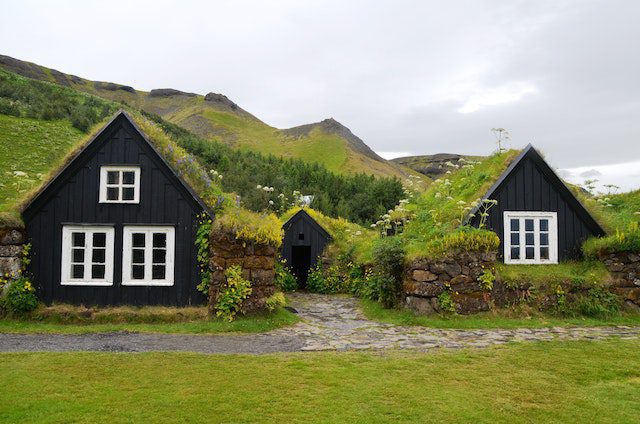
A green roof is a roof that is partially or completely covered with vegetation and a growing medium, planted over a waterproofing membrane. Green roofs provide excellent insulation, reduce energy consumption, and lower heating and cooling costs. They also improve air quality, reduce noise pollution, and help to mitigate the heat island effect. Green roofs can also extend the life of a roof by protecting it from sunlight, wind, and rain. They are also attractive and can create an oasis in an urban environment.
Neil Platt, Director, Emerald Home Improvements
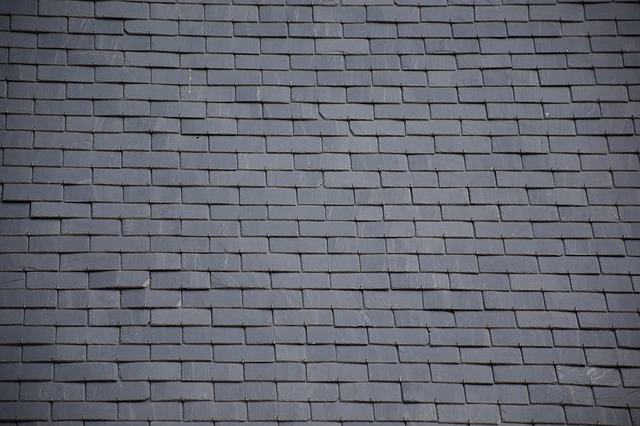
More and more households are interested in sustainable roofing to lower their carbon footprint. Sustainable roofing helps homeowners lower their carbon footprint by using materials with a smaller negative effect on the environment.
Being a mineral, natural slate's durability and eco-friendliness make it an easy topic of conversation.
Slate roofs: The best ecological option
Natural slate will continue to be eco-friendly throughout every phase of its lifespan. This has made it one of the best natural options for eco-friendly construction.
Slate has a small carbon footprint because of its easy and efficient manufacturing method. The mineral composition of slate ensures that it is entirely natural.
Natural slate has a long lifespan and may be recycled simply after its usefulness has ended. As the most resilient roofing material, slate can last for over a century.
Natural slate only goes through the procedures of extraction and processing; therefore, it releases no chemicals. Slate is an eco-friendly option because it may be used without the need for any synthetic or chemical ingredients.
Natural slate is one of the most eco-friendly building materials available for a variety of reasons. Instead of using fiber cement for a roof, natural slate can save up to 6.2 tons of CO2 emissions.
Among roofing options, slate has the lowest embodied energy because it is a natural product. Since it has an embedded carbon value that is no higher than 16% of that of other roofing materials, it is an excellent option to go with. Slate roofing is quite effective against heat, making the interior of the house considerably more comfortable.
The Inventory of Carbon and Energy, which evaluates the amount of energy and carbon in building material, found that natural slate had the smallest footprint. The production of other materials is more time-consuming and harmful to the environment, such as ceramic tiles, which necessitate a great deal of energy.
Roofing using slate is one of the greenest choices available. It has many positive effects on the environment, as detailed by the National Slate Association:
| Tiles | C02 per kg |
| concrete tiles | 0.19kg of CO2 per kg |
| clay tiles | 0.43kg of CO2 per kg |
| natural slate | 0.005 and 0.054kg of CO2 per kg |
When considering the effects on the environment, natural slate is the finest option for roofing material. Slate is the most environmentally friendly roofing option because it is made entirely from natural resources and uses the least amount of energy in its production.
The manufacturing methods of other products are far more intricate, and as a result, they have a greater ecological footprint. To produce zinc, for instance, requires a substantial quantity of electricity.
Slate is formed entirely from natural processes over millennia; it is chemical-free and environmentally friendly compared to other roofing options. The use of slate, then, is highly recommended for those concerned with their environmental impact.
As an engineer and a home-improvement business owner, I can attest that slate is a popular low-carbon footprint option for roofs. Slate is a natural stone that is both durable and attractive. It is also one of the most environmentally friendly roofing materials available, as it is 100% recyclable and requires no chemicals or other synthetic materials to produce. In addition, slate roofs have a very long lifespan, often lasting for centuries with proper maintenance. For these reasons, slate is considered an excellent choice for anyone looking for a green roofing option.
Ludovic Chung-Sao, Lead Engineer & Founder, Zen Soundproof
The argument on the sustainability of slate:
As much as slate is naturally used as-is without any in-between processes with the least carbon footprint, there are a few arguments on the sustainability of slate. Even though slate is beautiful and exceptionally long-lasting, it is also highly expensive, heavy, and requires a lot of energy to mine, manufacture, and transport.
Slate roofing is heavy; thus, it requires more support than other roofing types, which need more materials. If you wish to install a slate roof, you would have to deal with the concern of your roof's ability to hold it.
It is argued that concrete roofs are sustainable because locally sourced sand, cement, water, and iron oxide pigments are the building blocks for concrete roof tiles. However, for every tonne of concrete made, an equivalent quantity of carbon dioxide is released into the atmosphere making the concrete industry the second largest contributor to global warming.
Quarrying the components necessary to manufacture concrete can be harmful to local surroundings, in addition to releasing enormous volumes of CO2. In addition, transporting concrete tiles can continue to result in a greater quantity of carbon emissions.
Recycled asphalt shingles are growing in popularity in the United States as more and more states adopt their use in the construction or maintenance of highways. Asphalt shingles recycled into new asphalt are a common component in pavements, roads, and other roofing products.
Minnesota's municipal government has elected to construct bicycle and hiking paths out of recycled asphalt shingles. In addition, Georgia has mandated that 5% of all road and paving mixtures be made up of asphalt reclaimed from industrial waste.
Even if asphalt shingles get a poor name for being less environmentally friendly than certain other roofing materials, at least you know the waste from your home's tear-off will be put to good use. By reusing asphalt shingles, businesses like construction and transportation can save a lot of money, minimizing both their expenses and carbon footprint.
The roof is a crucial part of any building because it protects the interior from weather and damage. Installing them is no easy task, as it must be done correctly to ensure their functionality.
The roofer's level of comfort is often disregarded as an important consideration. If they want to get the job done right, roofers need to be able to navigate a wide range of surfaces with varying degrees of slope.
When working on a roof, wearing shoes or boots that provide ankle support without restricting your range of motion is important. Wearing shoes with good attributes allows comfortable mobility and prevents slipping.
The choice of working shoes largely matters in this case leading to the question: Are converse good for walking on roofs?
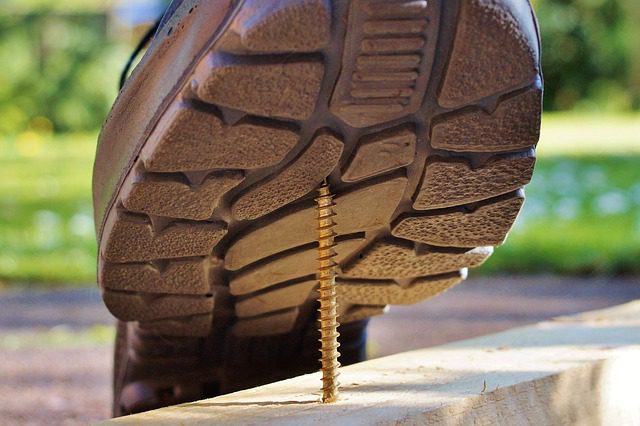
Working on roofs is one of the most common demanding jobs ranging from building new roofs to maintaining them, and roofers find themselves working in different weather conditions. Whatever the conditions you're working in, there is one thing you'll always appreciate: a good pair of shoes.
It is easy to slip and fall when working on a roof due to the steep incline or loose materials. Even relatively flat roofs might make it tricky to maintain complete stability while pretending to perform strenuous work.
Working on these roofs gets even more challenging in wet conditions, and you'll want a sturdy pair of shoes that won't let you down. You'll find comfort in its superior grip, sturdy durability, and the fact that it won't make you sweat so much that it feels like you've been hiking all day.
In addition, you need shoes that will keep you safe from any sharp objects, such as protruding nails, and the general comfort of your feet after working. A wide variety of footwear fits that description, but plenty don't, and the incompatibility isn't always immediately apparent.
The variety of shoes available and the significance of foot safety, performance, and other factors can make it difficult to settle on a single pair to purchase.

Developed in the early 20th century, Converse sneakers were originally designed to aid basketball players in their quest for comfort and flexibility. Since their debut, the shoe's design has stayed exactly the same.
The shoe consists of a white rubber toe cap, a stitched top, and a brown or rubber tan sole. Converse shoes are great since they are versatile, lightweight, and comfortable.
Skater shoes among roofers were popular because of their excellent grip area and pattern, but this should not insinuate that they are the ultimate non-slip roofing shoes. Converse are long-lasting footwear because they use superior materials in their construction with gum rubber outsoles that are durable enough for regular wear and tear.
A lot of roofers wore converse and still do when working on their roofs. The line is drawn if you have to comply with Occupational Safety and Health Administration (OSHA) regulations if you have a workforce that, in this case, would require steel-toed shoes.
Although roofing in Converse has several advantages, not all roofers are familiar with its specifics. Converse shoes are versatile, but can they be worn on the roof? Slippery shoes are a major no-no when you need to go around on a roof.
To begin, given that they are predominantly made from cotton and other textile materials, Converse shoes are not suitable for use in inclement weather. As a result, when the weather takes a turn or if the shoes are exposed to precipitation, they become damp and cold.
For another, they don't do anything to keep your ankles in place. Working on inclines requires special shoes with excellent ankle support to avoid twisting ankles.
Finally, the bottoms of a pair of Converse shoes aren't designed for traction and rough surfaces. Converse shoes are only recommended to be worn while it is dry outside.
Converse without socks is a recipe for blisters, especially on steep slopes. Listed below are some suggestions for making the most of your work in Converse.

As reported by OSHA, slips, and trips account for a disproportionate number of occupational accidents. They account for about 40% of all recorded major injuries and can trigger other equally devastating events like falls from great heights.
The majority of reported public injuries are the result of slips and trips. Before you go up on the roof with these well-known shoes, you need to know if they are non-slip.
If you are a roofer thinking about wearing Converse to work, it is crucial for your safety to know whether or not they are slip-resistant. Converse sneakers include a diamond pattern etched into the gum rubber outsole for better grip since they were originally designed to be worn on the slippery surfaces of indoor sports courts.
Converse shoes have qualities that make them more slip-resistant compared to other shoe types:
Shoe manufacturers typically incorporate a gum rubber outsole when creating footwear for indoor hardcourt sports like squash, badminton, and tennis. Converse shoes are known as "non-slip" because gum rubber provides exceptional traction on wet and slick surfaces.
The gum rubber soles of a pair of Converse shoes actually soften with wear. They heat up owing to the friction with the ground and your body heat, which helps provide the rubber with even more traction.
A gum rubber bottom has certain benefits in that it does not leave marks on a surface, so you won't have to worry about the look of the roof. Second, the increased traction created by the rubber's heating while you use them.

Converse sneakers are well known for their distinctive, diamond-shaped tread. If the sole of a pair of Converse shoes were completely smooth, they would slide right off of anything.
The outsoles' design is an excellent complement to the slip-resistant gum rubber from which they are produced. The design is ingenious because it improves traction precisely where it's needed most—on the balls and heels of the feet.
For over a century, converse has refined its diamond pattern into the most effective non-slip sole. The addition of patterned, gripping tread to these zones makes walking on these surfaces easier and safer.
Will the treads wear out?
When evaluating Converse's "non-slip" quality, there are a variety of other elements to think about. Consider how they fare in comparison to other footwear, how well the tread performs in wet conditions, and whether or not they will become slippery with wear.
Inquiring minds want to know how long the non-slip properties of converse shoes last. The outsoles of your shoes will wear out faster if you walk daily on rough surfaces, so keep that in mind.
Constant use will eventually smooth down the diamond pattern that resists slippage and weaken the grip. Outsole wear indicates it's time for a new pair of Converse.
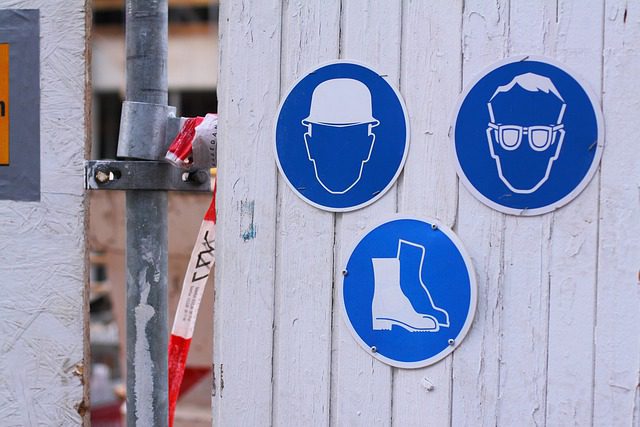
To comply with the Health and Safety at Work etc. Act 1974 (HSW Act), businesses must take reasonable precautions to protect the well-being of their workers and anyone who their operations might harm. Slips and trips can be avoided with the help of the methods outlined below, which employers, employees, and safety representatives may find useful.
It's important to eliminate potential hazards like slipping and tripping.
When it comes to the workplace, what can be done to reduce the risk of trips and falls?
A solid management system will make it much easier to pinpoint issues, settle on a course of action, put that plan into motion, and evaluate its success. Think about the potential sources of slip and fall injuries in the workplace, and then figure out what kind of controls will be most effective in preventing such incidents.
The next step is to actually implement these preventative measures. Focus on the genuine threats that can actually hurt you and the potential for injury, and the people who could be affected by the accident should be carefully considered.
Employees may see things that aren't clear to you and may have good ideas for controlling the risks, so asking them what they think the hazards are is a good idea.
Slip-resistant footwear is required when working on surfaces that can't be kept dry, such as in the case of roofing felt or underlayment or the deck during wet conditions. Trials must be done to make sure the shoes are a good fit for you and the surrounding conditions before using them for work.
If you are an employer of a roofing company, you are required by law to protect your employees and others from any harm. To the extent permitted by law, you, as an employer, must take reasonable precautions to prevent injury to your employees and others.
This is the bare minimum required by the Management of Health and Safety in the Workplace Regulations 1999:
If your employees are wearing shoes that may put them at risk, be it fall damage or injury through sharp objects, you are required to assess the risk and mitigate it to ensure their safety.
Is there anything employees may do to lessen the likelihood of trips and falls?
Employees are also obligated to take reasonable precautions to avoid endangering themselves or others and to make appropriate use of any safety gear that is made available to them. When working:
Converse has a good non-slip tread; however, it may not be the most durable in extremely wet or dry situations. No matter what shoes you wear, you need to be extra cautious when walking in the rain or on slippery surfaces.
The converse should be slip-resistant in moderate rain, but the tread won't be as effective in heavy rain. Wearing ice grips on the outsoles of your Converse shoes might increase their slide resistance, making them more suitable for use in icy conditions.
If you plan on wearing your Converse in the rain, you may want to treat the canvas with a canvas-safe spray. They are made from canvas, so they will also make your feet wet in wet weather, which is not comfy at all.
The sunny weather in Phoenix may make you want to escape to a remote resort and spend your days lounging by the pool while sipping margaritas. Fun can be had at any time of year, although winter is a particularly popular period for tourists.
Resist the urge to give in, as off-season travel offers some of the best prices at hotels and resorts. Enjoy the many resorts and spas, visit world-class museums, marvel at the desert's natural splendor, hike the many mountains surrounding the city, and more of the many things to do in Phoenix Arizona.
Desert terrains can be expanded through the exploration of Phoenix's many attractions. The greater Phoenix area is covered in this article.
Now, without further ado, I present to you the best of what Phoenix has to offer.
The Musical Instrument Museum (commonly known as MIM) in Phoenix is a lot of fun and a unique experience for any visitor to Phoenix, Arizona. Beautifully and carefully curated, it is the only Museum of its kind in the world dedicated to musical instruments from all around the world.
There is so much variety in the Museum's displays of instruments from all across the world. The collection of more than 15,000 musical instruments from all corners of the globe is unparalleled and sure to please any music lover's ears.
When you buy a ticket, you will also receive a headset, and afterward, you can explore the many zones that stand in for other continents and regions, read up on the locals, and witness live performances of some of the instruments you've been learning about.
The MIM offers a wide variety of fun experiences for its guests. It's fascinating to read about an instrument and then watch a video of that instrument being performed.
There are African drums and harpsichords among the rare guitars and other instruments on display at this Museum. In addition to the concerts, they also feature John Lennon's piano.
All of the instruments are shown in state-of-the-art, hi-tech showcases that let visitors see, hear, and interact with the pieces. Great and well-known instruments, such as those played by John Lennon, Elvis Presley, Taylor Swift, Carlos Santana, Johnny Cash, and others, are among those in the collection.
It's now possible to hear the instruments as they were originally intended to be heard. The music and instruments of various folk, ethnic, and tribal groups can also be viewed and heard in their native settings.
The Desert Botanical Garden in Phoenix is a popular destination for tourists because it provides a welcome respite from the heat of the surrounding desert. It features a desert garden on 140 acres with 50,000 plants, plus food, shopping, and a library.
Parking and entry are both accessible for people using wheelchairs. You can take a stroll through the garden's peaceful walkways, enjoy the activities held there, eat at the eateries, and get an education on desert life.
Most people, when they imagine a desert, see sand and various shades of brown. The garden features over twenty distinct exhibits for guests to enjoy, such as a variety of cacti and succulents, an extensive collection of plants with their own saltwater pools, and even a section specifically designed for butterflies and birds.
There aren't many people that travel to arid regions in hopes of seeing beautiful vegetation. The Desert Botanical Garden was built to dispel the widespread misconception that the desert is completely devoid of vegetation.
You might find this thought baffling, given how scorching Arizona and its deserts can get. At 1201 N. Galvin Parkway, Phoenix, Arizona 85008, you'll find the Desert Botanical Garden.

Visit the Phoenix International Raceway to get your heart racing if you're a fan of high speeds and fast cars. The raceway is a tri-oval racetrack that spans a distance of 1 mile and features minimal banking.
The NASCAR Racing Experience it's as real as it gets, and you get to put your driving skills to the test. Pre-booking their VIP experience, which includes paddock tours and pit lane access, will make you feel like a real insider on race day.
After a briefing and training session at a Drivers Meeting, you'll get to spin the tires of a NASCAR race car during timed sessions at some of the best tracks in the country. But if that's not thrilling enough, you can also try your hand at driving a go-kart or taking a "hot lap" around the track.
One of the many reasons why visitors to Phoenix should check out Taliesin West is that it is a National Historic Landmark. It was designed and constructed by the legendary Frank Lloyd Wright, who is widely regarded as a seminal figure in the development of a distinctively American architectural style.
For those of you who have a passion for architecture, a trip to Scottsdale's Taliesin West, a UNESCO World Heritage site and National Historic Landmark, is an absolute must. Its architectural style makes it a delightful surprise in the midst of what might otherwise be a boring stretch of the Phoenix desert.
From 1937 through 1959, renowned architect Frank Lloyd Wright spent his winters at his winter house in California, Taliesin West. Today, the home serves as the Frank Lloyd Wright Foundation's administrative headquarters and is available for tours and rentals by the public and business sectors.
The residence went through improvements when Wright visited annually, working with his students to carry out his vision. Inspiring the home's design were the neighboring trees and grass.
The home is a unique work of art. The walls were fashioned from local stones, and many of the angles and flows of the rooms drew inspiration from the environment as well.
Everything in the camp, from the studios to the homes to the theaters and amenities, was built with local materials and designed with the help of art and architecture students to blend in with the natural surroundings. Built at the bottom of the spectacular McDowell Mountains, these 600 acres of property were chosen simply owing to Wright's love of the Sonoran Desert.
Concerts and art exhibitions are only two of the many special events that are regularly staged to spruce up the area. In addition, certain excursions require advance scheduling in order for visitors to get access to the grounds.
Visitors can take advantage of tours and guides who can shed more light on the site's nuances and Wright's history. These tours of Taliesin West can last anything from an hour to three hours and cover a wide variety of topics.
Taliesin West can be found at 12621 N Frank Lloyd Wright Blvd, Scottsdale, AZ 85259. Open from 8:30 am to 6:30 pm daily, and there is also a gift shop to peruse.
Chairman of the Phoenix Planning Commission and a driving force behind the purchase of the land, James C. Dobbins, was honored with the naming of the lookout in his honor.
At this magnificent lookout, you can see more of Phoenix than from anywhere else. Numerous mountains surround the valley, providing a variety of hiking opportunities and scenic vistas.
At an elevation of over 2,000 feet, it is the highest point reachable by car. Whether you plan on visiting South Mountain Park, you should first check the park's website to see if any roads will be closed.
In this beautiful desert park, visitors can enjoy hiking on more than 51 miles of trails. Find the Dobbins Lookout at 10919 S Central Ave, Phoenix, Arizona 85042.
This is not a natural cave despite its name; instead, it is a flood control tunnel that is frequently occupied by tens of thousands, even hundreds of thousands, of Mexican Free-Tailed bats.
More than ten thousand Mexican bats winter in Phoenix before making the long journey back to Mexico in the fall. You should just observe these amazing animals in silence and in accordance with the posted rules and regulations.
When daytime comes around, they go to sleep, but as soon as dusk approaches, they cover the sky. Dusk is the best time to visit because that's when the bats come out to feast on insects, filling the sky.
Considering its proximity to Phoenix, it is truly a sight to behold. Because the bats don't seem to fear humans, you should be prepared for some close calls as they fly by.
It is found at 3698-3694 E Colter St, Phoenix, AZ 85018, United States
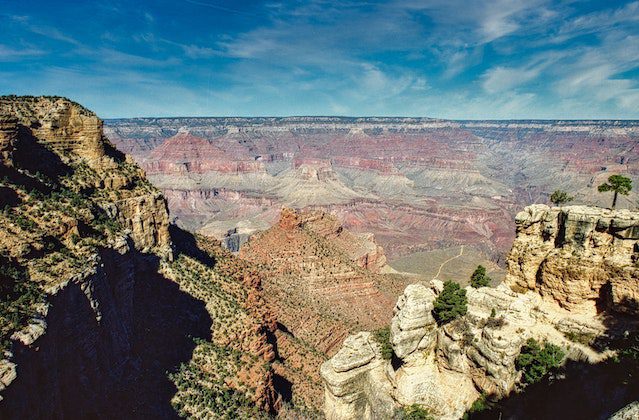
The Phoenix mountains are among the many unique things about the city. You can get a good workout climbing to the top of a mountain and being rewarded with a great view of Phoenix and its environs.
The parks do an admirable job of showcasing the desert in all its splendor. Incredible views of the valley from the summits make the workout seem less like work.
Many great hiking sites may be found in state and local parks across the Phoenix region. Beautiful cactus and other desert plants may be found everywhere, and after the spring rains, the landscape is blanketed in a lush carpet of greenery and colorful wildflowers.
Some of the many places you can hike include:
Located in the heart of Phoenix, just a stone's throw away from Heritage Park, lies the Arizona Science Center, a public science museum often regarded as the best in the state.
The four-story science center features numerous interactive exhibits. The planetarium is state-of-the-art, and it's never too late to expand your mind via exploration of the cosmos or the wonders of the natural world.
The Arizona Science Center is a family-friendly attraction downtown, where visitors of all ages may explore more than 300 interactive exhibits, see live science demonstrations, and gaze at the stars in the Dorrance Planetarium for one admission.
Exhibits are typically offered hands-on, demonstrating everything from friction and gravity to the solar system and biology, weather and energy, and aviation IT. Regardless, visiting the science center is one of the many must-do activities in central Phoenix.
The learning hub was made with kids in mind; there's a lot for them to pick up and learn there. If you're over 21, get to the center's science with a twist event, which features a night of science-themed programs, beverages, dancing, and a wonderful time.
The following is the complete address: 600 E Washington St, Phoenix, AZ 85004, USA.
For those who crave excitement, the 10-acre Castles N' Coasters amusement park features rides for all ages, from the Sky Diver roller coaster to the family-friendly vintage carousel. Castles N' Coasters, located in the city's northwest, has enough thrilling attractions to keep you entertained for a full day.
Even while Phoenix isn't necessarily home to some of the best amusement parks in the country, it doesn't mean there aren't some exciting destinations that fit the bill.
It's possible to choose from a variety of thrilling rides, splashdown, a log flume water ride, and when the craving for speed has been satisfied, visitors can enjoy the 18-hole mini-golf course or the neon-lit arcade.
Intense heart rate increases are expected on roller coasters like the Desert Storm, which features numerous loop-de-loops. And that's not all there is to do here; there's also a drop tower, arcade, bumper boats, cars, and go-karts.
It is located at 9445 N Metro Pkwy E, Phoenix, Arizona 85051.
This garden is a welcome respite from the heat and aridity of Phoenix. The Japanese Friendship Garden first opened in 1987 to strengthen ties between Phoenix and Himeji, Japan.
Japanese Friendship Garden is an actual Japanese garden in the midst of Phoenix, in contrast to the Desert Botanical Garden, which is dedicated to the desert and native species. The architects of Himeji created this tranquil sanctuary full of lush vegetation and koi fish to decorate the carefully planned landscape.
The 3.5-acre site features a koi pond stocked with over 300 fish, a 12-foot waterfall, stone footbridges, lanterns, and a tea house where traditional ceremonies can be held.
You may wish to include a stop at this tea garden when planning your trip to Arizona. It is also the best spot to experience a traditional Japanese tea ceremony.
The garden also hosts a number of other events, such as craft workshops and summer jazz nights, in addition to tea ceremonies. There are also many additional events where people can see and try Japanese dances, arts, and cuisine.
When in Phoenix, stop by the Japanese Friendship Garden at 1125 N. 3rd Avenue, Phoenix, AZ 85003
The Phoenix metropolitan area and its neighboring areas are rich in archaeological potential, so it's no wonder that the Arizona Museum of Natural History is well-known for its dinosaur displays. The Arizona Museum of Natural History near Tempe Town Lake is a fun and educational destination for visitors of all ages.
The Museum is famous for its extensive collection documenting the history, culture, and migration patterns of the Grand Canyon State's native species and artifacts.
You can go on a Paleontological excavation in Arizona, learn about the history of Western North America's indigenous peoples, and much more.
The Museum has been in operation since 1977 and is located in the area around Phoenix in the building that housed Mesa City Hall. Guests can explore the Museum's multi-story Mesozoic Era exhibit, Dinosaur Mountain, complete with a three-story waterfall.
Young explorers can get up and personal with lifelike replicas of dinosaur skeletons, while aspiring paleontologists can practice their skills in the Museum's Paleo Dig Pit.
Because of the city's rich archaeological past, the Arizona Museum of Natural History is among the top Phoenix attractions.
It is located at 53 N Macdonald, Mesa, AZ 85201.
Presenting over 17,000 pieces of cutting-edge international and modern art, the Phoenix Art Museum is the largest art museum in the southwestern US and a must-see for art lovers. It may not be as huge as some of the world's best art museums, but it certainly holds its own.
It houses so many wonderful paintings, including the permanent collection and the fantastic temporary displays. This Museum features a wealth of entertaining modern art shows.
Collaborating with the University of Arizona's Center for Creative Photography means that guests can also indulge their passion for photography here!
You may find it at 1625 N Central Ave, Phoenix, AZ 85004.
Wrigley is a household name since it is synonymous with the ubiquitous chewing gum manufactured under that name all over the globe. If the name Wrigley seems familiar, it's probably because of the gum by that name.
It turns out that the estate perched over Phoenix belonged to none other than chewing gum magnate William Wrigley Jr. This corporation was founded by William Wrigley Jr., who in 1932 commissioned the construction of a magnificent mansion to celebrate his wedding anniversary.
It enjoys a commanding position on a hill, taking in breathtaking panoramas of the surrounding landscape, including both urban areas and mountain ranges. Those interested in the building's history or rumored hauntings might take a tour to learn more.
The magnificent tile-work, which includes tiles originally made at Wrigley's tile factory on Catalina Island, gives the building a decidedly Californian vibe, making it seem more like a destination than a destination in Arizona. The tiles had to travel over a hundred miles from the chateau to the Californian factory, so mules were used to make the journey.
As one of the best local restaurants and event spaces, it has become a popular destination for visitors visiting Phoenix. Join one of the 45-minute tours of the mansion if you're not interested in hosting an elegant brunch or wedding reception there.
The address for the Wrigley Mansion in Phoenix, Arizona, is 2501 E Telawa Trail.
To promote American Indian art, the Heard Museum was founded. Located north of Phoenix, Maie Bartlett Heard and her husband established the Heard Museum in 1929, not long after they had purchased the La Ciudad Indian Ruin.
The Heard Museum in Arizona is widely regarded as one of the best museums in the United States for showcasing Native American culture and artifacts. This Museum houses around forty thousand works of ancient and contemporary Native American art and artifacts in its award-winning displays.
Phoenix has a significant Native American population, and this Museum is an excellent resource for learning about the region's history and culture. This Museum has a unique take on art and culture, with a regional focus on the American Southwest and North America.
Since its completion in 1929, this landmark has been a major venue for showcasing American Indian art and culture to an international audience. Many festivals, educational events, and exhibits on topics like Navajo weavings, Hopi katsina dolls, Zuni and Navajo jewelry, ancient ceramics, and woven baskets.
The address of the Heard Museum in Phoenix, Arizona, is 2301 N Central Ave, Phoenix, AZ, 85004, USA.
Consider a romantic dinner cruise or a scenic daytime adventure with Dolly when looking for things to do in Phoenix. Excursions last between 1 hour and 30 minutes and 3 hours.
The Apache Trail is non-negotiable, but why spend hours behind the wheel when you.
People can take dinner excursions or sight-see the lake's beautiful waters aboard this vessel. A few additional sights are worth seeing in this historic stagecoach stop along the Apache Trail in the American West.
Cruises depart during the day at around midday and evening at sunset, with the exact times altering seasonally. You won't find anything else like it in Phoenix, so don't miss out!
Approximately fifty miles east of Phoenix's downtown, in a place called Tortilla Flat Arizona 85117, at 16802 AZ-88, is where you'll find Dolly Steamboat. There is a wide variety of cruises to pick from, and customized tours are also available.
Goldfield Ghost Town is a tourist attraction in Phoenix, Arizona, rebuilt from the original ghost town. A trip to the Goldfield Ghost Town is a great way to spend a day.
After gold was discovered in the Superstition Mountains in 1893, the community of Goldfield was established on the eastern side of the Valley of the Sun. When the gold ran out, the mine shut down in 1926, and the town was slowly abandoned.
Many of the historic structures along Main Street are open for viewing. The mine tour, train journey, and other entertainment options are just the beginning.
With its many authentic western structures and skilled re-enactors, this town provides tourists a flavor of the Old West as it was at its peak. Another activity is horseback riding.
If you aren't interested in participating in one of the town's excursions, you might want to try visiting the Museum and staying for the free gunfight show.
The address of Goldfield Ghost Town is 4650 N. Mammoth Mine Road, Apache Junction, Arizona 85119.
The Tres Rios, Environmental Restoration project restores 700 acres of wetland and riparian habitat along the Salt River. The project connects the restored wetlands to a nearby wastewater treatment plant.
The wastewater treatment plant pumps recovered water to the wetlands, where plants and animals drink it before it's released into the river. This project repairs a natural ecosystem by restoring the Salt River to the early 1800s.
Tres Rios is home to around 150 bird and animal species, including muskrats, raccoons, skunks, coyotes, bobcats, and beavers. Cottonwood groves, willows, mesquites, and other desert shrubs attract migrating and wintering songbirds.
Do you ever think about how people in the Valley of the Sun put up with the oppressive heat before air conditioning was commonplace? The Museum was a Queen Anne Victorian home built in 1895, and it has been meticulously renovated to serve as a museum interpreting Phoenix's past.
The Museum was once a beautifully restored Queen Anne Victorian residence from 1895 where visitors could learn about the city's history while taking in its splendor.
Visitors can see how early Phoenix families actually lived by touring every room in the house. You should know that Rosson House is only open to the public during guided tours with a typical length of 60 minutes.
The Hall of Flame Fire Museum is another excellent option for a one-of-a-kind museum visit. There's a good reason why the Hall of Flame Fire Museum in Phoenix, Arizona, is one of the city's most popular tourist destinations: it has a great name.
This Museum is a homage to firefighters and a historical collection, with exhibits spanning from 1725 to the present day and covering an entire acre. This popular destination is the largest firefighting museum in the world. It honors the service and sacrifice of all first responders and pays tribute to the firemen who put their lives at risk while protecting the public.
The antique fire engines on display, some of which were built in the 1700s, are the primary draw. Most people who check out the Hall of Flame Fire Museum say that the refurbished fire engines are the highlight.
The Museum also displays automobiles from other countries. This Museum is fantastic if you want to learn the historical background of a topic you haven't given much thought to before.
You will gain a lot of knowledge and have a fantastic experience. From the most recent innovations in firefighting technology to artifacts dating back to 1725, this fascinating Museum celebrates firemen in all their illustrious glory.
The Hall of Flame Fire Museum can be found at 6101 E Van Buren St, Phoenix, Arizona 85008.
The Phoenix Police Department's history, beginning in 1881, is on display at the Museum. The Phoenix Police Museum is an excellent resource for anybody interested in Phoenix's law enforcement history, spanning more than 130 years.
The Museum houses several informative displays, some of which encourage audience participation. Both historic and modern vehicles, as well as a memorial to the victims of September 11th, and the inspiring experiences of police officers who have protected the city are on display at the Museum.
Aspiring investigators can peruse images from actual cases and examine authentic equipment, unlike in traditional exhibitions. If you like art and history, this is one of the most interesting things to do in Phoenix.
The Children's Museum of Phoenix is a must-see for any youngster, offering them a chance to explore science through a wide variety of hands-on activities, such as blowing bubbles, making crafts, and navigating obstacle courses.
There are a variety of exhibits and programs designed to engage, educate, and entertain children of all ages. With three stories and 48,000 square feet to explore, this Museum has something for kids of all ages, from infants to preteens.
Over 300 interactive displays allow kids to learn about various important subjects in a way that's both entertaining and instructive. Some of the most interesting displays include a noodle forest, a fort-building area, a small market, a kiddie cafe, Pedal Power, the Schuff-Perini Climber, and BlockMania.
It is located at 215 N 7th St, Phoenix, AZ 85034, United States.
There are many opportunities for outdoor fun in Phoenix. Phoenix is in the low desert; therefore, the winters are mild, and the summers are hot.
May through September is the best time to visit if you can stand chilly mornings and evenings and hot days. The monsoons typically last from about the middle of June to the end of September. It's wonderful from October through April.
In June, July, and August, temperatures average 105 degrees Fahrenheit (almost 41 Celcius). Temperatures in June and July average 110- and 118 degrees Fahrenheit (almost 48 degrees Celcius).
As a highly reflective material, radiant barriers either reflect or emit very little heat from the surface opposite the heat source, providing a permanent means of controlling radiant heat. Attic insulation and radiant barrier composite decking products are utilized in conjunction with each other as part of a home's overall energy efficiency plan.
You'll feel the heat radiate out of your ceiling and into your home when conduction takes over the radiant heat and conducts it through the insulation. To keep a radiant barrier from conducting heat, it must be separated from the heated surface by an air gap.
Radiant energy is unique in this debate because it is more sensitive to temperature differences than other heat flows. Radiant barriers decrease heat transfer by reflecting or releasing very little heat from their surface.

| Heat transfer | Method |
| Radiation | Radiation transmission requires a vacuum or a transparent medium, which may be either a solid or a liquid. |
| Convection | This happens through air circulation in the house, i.e., open windows and other air spaces. |
| Conduction | Occurs through the contact of different surfaces such as the components of your roof. |
You need to know how a house loses and gains heat to know the function of a radiant barrier and if it is good for your home. The heat transfer rate between hot and cold areas depends on the temperature differential between the two areas.
Heat can be gained or lost by a house through different methods. All these depend on the media of heat transfer, but radiant heat does not require any media.
A radiant barrier, which is a thin layer of reflective material that functions as a mirror to reflect heat back into your home, can be used to make your home cooler in the winter and warmer in the summer.
A variety of studies have shown radiant barriers to have a significant influence on heating and cooling expenditures. Installing radiant barriers in the attic of a house is a common way to limit summer heat gain and save energy bills.
The barriers are made of a reflective substance that reflects it away instead of collecting heat. On the other hand, thermal insulation materials perform a better job of reducing heat transfer.
Attic temperatures can rise by as much as 30 degrees Fahrenheit thanks to conduction in the roofing materials. When a radiant barrier is installed, there is less heat transfer between the roof and other attic surfaces.
Convectional heat flow is slowed by conventional insulation materials but to a lower extent. By limiting radiant heat gain, radiant barriers and reflective insulation systems do their job.
Radiant barriers are most effective when they are positioned perpendicular to the path of the incoming radiation. The advantages of a radiant barrier are increased when the temperature differential between the two sides of the radiant barrier material is greater.
Attics with cooling air ducts are a good place to put radiant barriers in hot areas since they work better there than in cold climates. Using radiant barriers in a warm, sunny region can cut cooling expenses by 5-10%.
Radiant barriers can serve as the face material for thermal insulation in various configurations.
Aluminum foil is applied to one or both sides of a variety of substrate materials, including kraft paper, plastic films, cardboard, oriented strand board, and air infiltration. Fiber-reinforced materials are used to make goods that are more durable and easier to handle.
Take a look at these several options for residential roofing radiation barriers.
Aluminum foil is laminated to plywood to create a radiant barrier sheathing installed with the foil side facing the attic. This sort of radiant barrier is typically built as part of a larger project, such as a new building or a roof replacement.
A foil radiation barrier is put between the rafters of your attic, whereby a tiny gap separates the insulation and the attic's roof. This gap is important, as we discussed above, to avoid heat transfer through conduction.
Air is a poor conductor of heat, and the air gap serves to reduce significant heat transfer through conduction which is faster in metals. If other forms of insulation are installed, they also reduce heat transfer through conduction as they are poor thermal conductors.
Infused with silver, radiant barrier chips are blown on top of the current insulation layer into the attic. This is suitable for attics with a low pitch or that are otherwise difficult to reach for other methods.
Aluminum and zinc-coated metal roofing sheets that are stamped to look like traditional roofing shingles or tile are available for residential use. Radiant barrier plywood sheathing is commonly used in conjunction with this sort of roofing material.
Using a licensed installer or following the right DIY steps is the best way to ensure that a radiant barrier is properly installed. For self-installation, be sure to read and follow all manufacturer instructions and safety precautions, as well as any applicable building or fire codes in your area.
When building a new home, radiant barriers are easier to add; however, if your old home has an open attic, you can still do so yourself. There are also installation instructions provided by the reflective insulation manufacturers that you should follow.
The first step to installing a radiant barrier in an attic is to declutter it. Because attics are commonly used for storing things, you'll have to put in some effort to make it into a workplace for your creative endeavor.
Determine the length on one side of the roof and begin installation about 3 inches below the roof's apex. Install it to about 3 inches off the floor, then follow the roof's angle to the next step.
This method will make it easier to measure the radiant barrier and ensure that you're not wasting any of the material.
2. The radiant barrier can now be cut.
The first piece of the radiant barrier should be cut to the desired length with a utility knife.
Avoid stepping on or bunching up the radiant barrier when working with it, as these small bundles might diminish the sheet's length.
3. Keep the Top Stapled
Staple the radiant barrier to the rafters at a distance of 3 inches from the roof, as determined by the measurement you took earlier.
Staple your way through the attic.
4. To secure the bottom, use a staple gun.
Once the radiant barrier has been stapled to the top of the rafters, it should be slowly lowered to the bottom of the rafter to match the angle of the home. The bottom of the radiation barrier should be nailed down.
If the radiant barrier is cut too short or you run out, simply overlap the material by about 2 inches and staple it into the rafters. For best effects, consider adding a second coat.
Keep going until you find the wall plate by repeating these procedures (the vertical walls of the attic are typically located at the front and back of the home). To finish, go back and do it again on the other side.
You don't have to affix the material to the walls if you want to keep your house cool.
Installing on the Floor:
Instead of putting the material on the roof, put it down on the ground. However, this implies that you will no longer be able to use your attic as either a living or storage space.
All you have to do is a staple down the material after it has been laid over the insulation and floor joists. Make sure to remove any areas where ductwork or vents are present.
A radiant barrier may not be able to be properly installed in some attics due to the lack of space. In these circumstances, a radiant barrier should be installed on the roof and floor.
The radiation barrier should be installed about halfway down the roof—or, if you like, as low as possible. When you reach the point where the roof and floor meet, you'll begin laying the flooring section, starting at the end of the radiant barrier on the roof.
When compared to traditional insulation, radiant barrier insulation has some unique characteristics. New insulation methods like radiant barriers can significantly reduce utility costs for homeowners.
Insulation from the radiation barrier is not dependent on density like it is with fiberglass or cellulose. Instead, it's constructed from a reflective foil-like material that can either keep heat out or let it in.
The benefits and drawbacks of a radiant barrier are debatable. They include:

Radiant heat, also known as radiant energy, is produced when the sun's rays strike a surface, such as a house. Most of the heat entering your house comes from these sources.
The term "radiant barrier insulation" describes this material's ability to block out radiant heat. The radiant heat that can penetrate other forms of insulation is blocked by radiant barrier insulation.
Similarly, insulation materials like fiberglass and cellulose inhibit heat transfer by conduction and convection.
It's possible that moisture, mold, and pests can swiftly damage other types of insulation. Insulation provided by radiant barriers does not degrade over time: radiant barrier insulation avoids the problem altogether.
Radiant barrier insulation is highly recommended for those who reside in warmer climates.
It improves the efficiency of your air conditioner, keeping your home comfortable even on the hottest days.
In contrast to cellulose, this insulation is resistant to mold growth.
Radiant barrier insulation is resistant to mold and moisture, but cellulose and fiberglass are not.
A radiant barrier's ability to deflect radiant heat means it can withstand high temperatures and humidity without damage.
Some radiant barriers feature perforations to let air through and keep moisture out.
Radiant barriers are useful for regulating heat since their performance is unaffected by humidity, unlike standard mass insulations.
Handling traditional insulation can irritate the skin, eyes, and lungs. Radiation shields don't give off lung-damaging particles (like fiberglass).
When dealing with insulation, it's best to play it safe and wear protective gear, including clothes, gloves, goggles, and a face mask, just in case.
Insulation goods and materials can be ranked by their R-value. The R-value of your roof is something you should consider if you want to ensure warm air stays in during the winter and cool air stays out during the summer.
Materials with higher R-values insulate better because they allow less air to pass through from the outside to the inside. An increase in thermal efficiency is achieved through radiant barriers, which increase the R-value.
Up to 97% of radiant heat can be deflected by reflective insulation. Insulation-like thermal resistance materials are typically positioned in the middle of a double-sided radiant barrier.
The R-value of conventional insulation degrades over time (the ability to stop or slow heat transfer from warm to cold). Radiant barriers, in contrast to more conventional insulation, never "settle," meaning their quality and/or R-value remain constant over time.
If you already have insulation in your attic or crawl space, a Radiant Barrier can be added on top of it. Additionally, radiant barriers can increase the R-value of insulation by varying amounts.
Rodents and birds won't bother with radiant barriers because they usually contain inorganic materials.
If you need to insulate ducts, hot water tanks, or pipelines, go no further than radiant barriers.
For surfaces to cool off, radiant heat must be reflected off of them.
Radiant barrier insulation is not susceptible to mold growth; however, it is susceptible to dust and dirt buildup. The buildup of dust, while not necessarily harmful, can diminish the effectiveness of radiant barrier insulation.
Radiant barrier insulation is a good choice for warmer climates because to its efficiency and effectiveness, but it may not be as useful in colder regions. Using thermal insulation in conjunction with radiant barrier insulation or thermal insulation on its own may be the best course of action if you reside in a cold climate or experience periods of abrupt cold weather.
In colder climates, radiant barriers might be more expensive than thermal insulation.
Radiant barrier insulation is great at blocking the sun's rays, but it will not be as good at blocking the heat from the air or the ground.
Because of this, installing thermal insulation in your home, especially in the attic, could be a good idea.
You should still use mass insulation in addition to a radiant barrier. In addition to the radiant heat benefits, it also helps limit the passage of heat via conduction and convection, thus increasing the thermal efficiency of mass insulation.
The project isn't that difficult to complete on your alone, but you'll need a lot of help to get it done—so you might need to call a few friends.
Having a local attic insulation company come out and conduct the job will save you a lot of time and effort.
When considering investing in vacant land or acres, one potential pricing factor that should not be overlooked is: How Much Does It Cost To Connect Electricity To A Rural Property?
It can be expensive or relatively inexpensive, depending on several factors. When examining a particular property, be sure to investigate how far the nearest power lines are from the property.
Generally speaking, electricity in rural areas is easily accessible. Power lines run countless county roads that cross our great state. However, just because there is a transmission line at the door does not mean it is ready.
What if you want to build a house behind the house?
Depending on the size of the property, it can amount to up to tens of thousands of dollars. Also, depending on the region and the service provider, the price per pole and per meter can vary greatly.
On a property in Texas, it cost $12,000 to run a half-mile railroad inside the estate, which included six stops, for the total cost. Approximately $ 2,000 per position.
In central Texas, costs range between $ 3,500 and $ 5,000 per shift. In addition, most suppliers will not give you an estimate without an engineer to inspect the site, which can be done during the in-depth analysis period.
When introducing customers who buy, one of the first things I do when reviewing potential ads is to look at a map and see if there is electricity at the site or where the pole is closest to the electrical voltage.
This article will expound on how much it costs to connect electricity to a rural property.
The cost of electrical installation depends on the process and location, but you should expect to spend approximately $10,000 or more in most cases. The local power company should tell you where the power lines are closest to the property you are considering.
Do not rely on the seller or their agent for a final answer, although they may if indeed electricity is already available on the property or on the existing driveway where it is located or maybe.
Be Mindful: Beware of the ambiguous "close" answer. Close is indefinite. That could mean right next to the road or quite far from it.
Most utility companies will charge you for each leg required to extend the line to and from your property.
You will need to determine if the lines are available from public property, such as a highway, or from a neighboring private property, in which case you will need the owner's permission to do so. Often this is not a problem, but it can be a red flag for neighbors.
Like many today, you might be interested in investing in solar energy. That's a good idea, but you'll still need access to your local power grid.
Key Point: For some neighbors, it's a red flag when you request to use their line, so make sure you seek the owner's permission and don't make any irrational decisions.
Determining the price of the essential services you need on your property is easy but essential.
First of all, you need to know the address of your property. If your shipment does not have an address, you can use the county Geographic Information System or GIS map to determine the roads and addresses closest to your property.
You'll most likely find nearby utilities on the various properties listed, but remember that "nearby" is a loose term. Buying land with utilities a few feet from the property will be cheaper than one with services three miles away.
Although a real estate agent with a valid license may know these things, it is advisable not to depend on this information. Check in detail to find out how far you are from the required content.
You will need to contact your local authorities to find out the price. Google Maps can be your friend in this situation. For example, you can look for an energy company that serves the land area.
Call the utility to figure out how much they charge for line extensions. Then calculate the distance from your property to the nearest transmission line to find out how much you will spend on getting electricity.
If utilities seem expensive or not available, another option is to call local contractors to quote the prices of services needed.
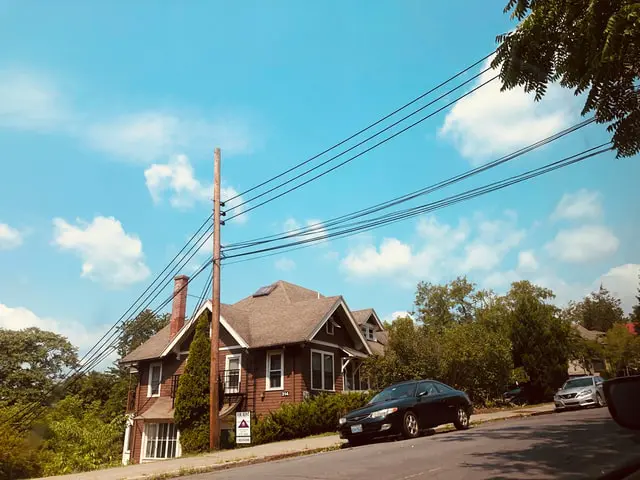
Whether you put together a camp in a rural area or start a house in a blank game, you will need a little power to make it peruse.
For starters, you have two options:
In most cases, the goal will be to have a permanent power stable from the company's public service after completing the project.
Assuming that this is true, it is logical to understand from the beginning; you will only need to succeed in configuration once.
But they live outside the scope of usefulness, especially in exceptionally rural areas where people want holiday homes or hunting camps are common.
Here we will cover two approaches to solving two methods of energy installation: using a portable generator or connect the utility.
Before buying a property, before deciding the type of energy you want, you need to check how users will be charged to download the service on your site.
If the electrical lines lead along the road in front of the object, then putting in a column or two is something they do every day. But if the construction site is long along the road, perhaps miles in the woods, for example, the price of obtaining the power supply in place will be very different.
The electrical company will give you free lines of service delivery, for example from the road to the place to 100 meters. But when you move further out with more poles, then more cable is needed. The cost can be $25 to $50 per foot.
Therefore, if you are a one-mile way from the road, this means you could be paying somewhere in the region of $125,000 and $250,000. Some public services websites even offer you to finance part of that cost up to APR from about 10%.
Key Insight: Make sure you have planned and understand potential costs. It is necessary for the success of your project.
Everyone will need energy if they decide to build a house or contract subcontractors to do the job.
Most entrepreneurs will bring their generators instead of relying on you to give them.
At some point, the house will need an electric service before someone receives a Certificate of Occupancy.
In general, they will have to put in a new post, and a transformer regardless of the service is temporary or permanent. The temporary service will come from several receptacles connected to a pole, a few feet above ground level. They are served with a cable that falls down the column, through one meter, and in climatic protected circuits.
It will be a pair of duplex tanks of 120 volts. If you want more, you will need to negotiate the installation with a public company. The power of construction tools is assumed in place of expansion.
There are several benefits to establishing temporary utility power. With this type of power, you don't have to stress about an extremely loud generator or one that doesn't work. And don't forget you constantly need to top it up with gas.
Whether you want a temporary camp generator or to install energy in a new home, completing thorough research in advance will make installing power on a vacant property an easier process.
Take Note: You will need to equip your house with the proper outlets and circuit breakers to ensure the power can reach every room. Work with your selected teams to make sure you choose the correct models and place.
One thing is for sure: there is no set amount to cover the cost of the various utilities you will need on your property.
Depending on the wide range of problems you may encounter with your property, you can spend less than $4,000 or more than $40,000 on one utility. Here is one major factor that will affect the cost of getting utilities on your land:
How much does it cost to connect electricity to a rural property depends heavily on location. In most cases, if your property is close to utilities, the amount of money you will spend will be less than if you are away from these sources.
For example, you will have to pay more for each meter of line extension from the utility to your property. In some cases, cables may need to be routed underground, which is even more expensive than laying overhead cables.
Some companies are negotiating $40,000 per mile of power line extension. There are other sources of electricity if the connection to the transmission line is too expensive due to its location.
This is a question that you assume everyone will know the answer to, but not everyone can answer. Generally, this is because in some areas across the States. You don't always get to choose your supplier.
To find out who your electricity company will be, start by asking landowners in the area to whom they are sending your check. If that fails, look at the utility poles closest to your property, usually those at highway intersections, and make sure there is a small sign that says the utility company.
Or you can search your state's websites. Some may have an energy-specific section on their website that provides you with more information about electric utilities and suppliers by address.
You could potentially get an answer by reaching out to your local utility or state regulatory commission.
The key is to start by calling the one you think is the most likely candidate. Call and ask questions about your area, and they will be able to tell you if they serve you or refer you to another company.
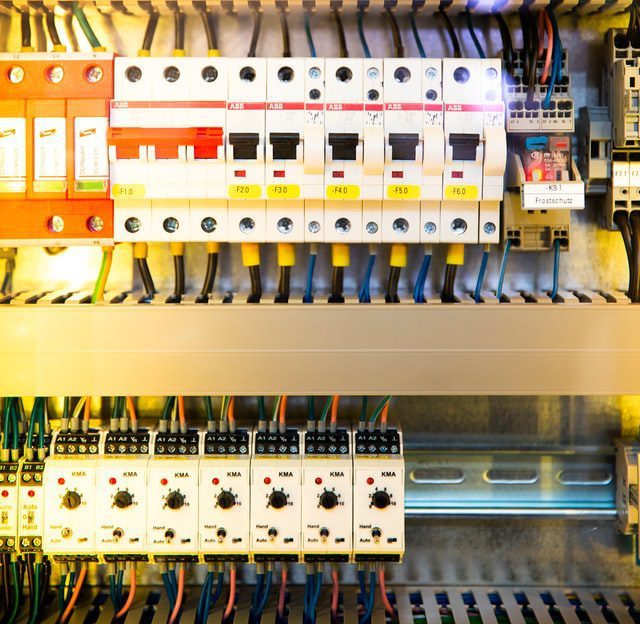
Request a quote for a new connection from the distribution system operator in charge of electricity in your geographical area when you have plans for your proposals, including layout and location plans. The application process usually involves filling out an online form.
The connection is not cheap, and it is better to calculate the costs as soon as possible. The offer will also have a time limit, so keep in mind the required delivery time.
Nothing will happen until you pay the entire stock. Once you do that, ensure you stick to the schedule.
Once you receive the offer, you will receive the person's name in charge of your project. They may facilitate contract approval and assist in transitioning from distribution to supply business when a merger is required.
Keep in Mind: Building a professional relationship with the person in charge of your project is necessary.
Installing a new electrical service involves more than writing a check.
Further logistical issues are becoming more complex as far away from the country as possible.
1. An engineer will be sent to inspect the property and determine how to manage the new transmission lines. The engineer will determine the route taken by the new lines, as well as the requirements of the utility company for cleaning between the trees, etc.
2. The engineer will tell you which trees should be removed and other objects from the path.
3. You will establish a service contract essentially detailing your promise to purchase electricity.
4. Generally, the power company will ask you to lay the foundations and slab before any work is done to bring electricity to the construction site.
Insight: It might sound unreasonable to ask for foundations to be dug and slabbed. Still, many electricity companies have been let down by owners who state they will build and purchase electricity monthly, but this falls through.
When you meet an engineer representing an energy company, be sure to find out their name and phone number.
On occasions, customers have done everything an engineer or an electrical company has requested, only to be told later that something different is needed, which takes up a lot of time and effort on the customer.
Sometimes the power company will hire external contractors to clean the new lines.
You can help ensure communication is completely clear by regularly contacting the electricity company and the contractor to guarantee the job is done correctly in the first instance.
Before the utility can install the actual electricity meter, the city or county may need to inspect the wiring installation and the temporary pole. The city/county should send an approved inspection report to the power company to install the meter.
If you contact the utility company regularly, ask them if the city has sent inspection results. Sometimes the electricity distribution company will say that they did not receive it, even though the city says that they sent it. It will take patience and a lot of persistent monitoring to clarify this.
As with any property repair on installment, determining the answer to the question: How Much Does It Cost To Connect Electricity To A Rural Property, is one that requires time, effort, patience and, perseverance.
The process involved to get electrical current in your rural property sparks some disturbances such as expenses. On average, it cost $10,000 or more to complete the job.
Making sure you have planned and understood potential costs is necessary for the success of your project.
Location is a major factor affecting the overall price of your electrical job. In most cases, if your property is close to utilities, the amount of money you will spend will be less than if you are away from these sources.
Ultimately, clear communication is detrimental to a smooth run process. Consulting your utility company frequently is key, as well as keeping a clear line of communication between additional contractors.
For flat roofs, roofing tar is the material of choice. Tar and gravel roofing might utilize it as the initial layer, or it can be used to patch up gaps and fractures in the roof. Learn the fundamentals of this roofing material and how to apply it by reading the information below correctly.
To repair leaks or to put on new tar and gravel roofs, roofing tar is a common choice. Roof tar is a solid and waterproof substance. These materials are often a black and smooth blend of coal tar and petroleum compounds.
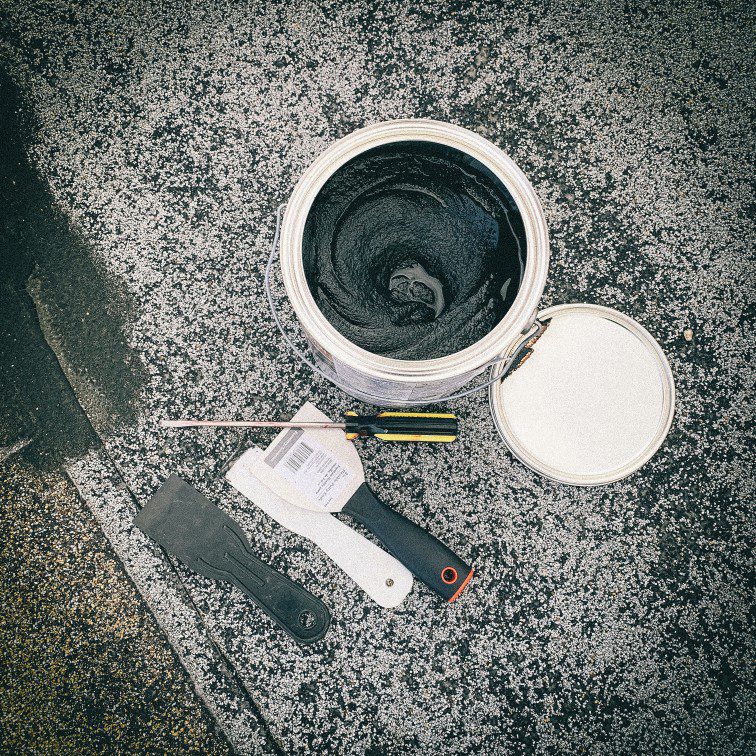
Roofing tar is a flexible, long-lasting, water-resistant compound. It can withstand rain, snow, sunshine, and extreme cold.
Repairing a leaky roof is one of the riskiest home improvement chores a person can undertake. Incorrect application of roofing tar or improper walking on the roof might further damage the roof.
The best approach to deal with any significant or small roofing issues is to seek the advice of a roofing specialist.
Flat roof leaks may be fixed using a black, oily substance known as roofing tar. Oil and other petroleum products are used to make it.
The coal production process produces coal tar, a dark brown or black residue. For roofing applications, coal tar must be purified and treated.
A form of roofing tar known as coal tar roof cement is used to seal, bond or repair damaged or failing roof regions.
There is no asbestos in newer roofing tar formulas, although they may include solvents, surface adhesion agents, polymers, and minerals. Trowel-applied coal tar roof cement differs from paint- or caulk-applied tars in that it is applied using a trowel.
Black is the most common color for roofing tar compounds. However, some producers have produced lighter shades like silver and white.
It is possible to paint some roofing tar to match the roof's original color once it has dried. A tar remover may be used to get rid of the tar on your roof, but this might harm certain types of roofs.
Bitumen, tar paper, gravel, and other flat roof materials may all be repaired using roofing tar, which can also be used as an adhesive in some instances. As roofing tar compositions vary by brand and kind, choosing the right product for your needs and application is critical.
Temperatures lower than 70F will cause the product to take a long time to harden. On the other hand, Roofing tar will convert into a liquid at very high temperatures.
Tar roofing is excellent for flat and low slope roofs because of its ability to self-heal and repair leaks. It is not recommended to use roofing tar on steeply sloped roofs since it will become liquid at high temperatures and leak.
In addition, roofing tars should not be used on asphalt goods or diluted with water or other solvents since they might damage the asphalt.
Flat roofs benefit from roofing tar's excellent UV resistance, making it an ideal material option. In addition to providing wind and water resistance, roofing tar is a perfect choice for flat roofs because of the water-holding capacity of the material.
In contrast, tar is a non-renewable resource. During the application and cure processes, it might emit toxic fumes that should be avoided.
When working on a tar roof, everyone doing the installation must wear protective masks. Installing the tar on the roof while the occupants are gone is an option for contractors.
The average house owner may make the application of roofing tar, but it is recommended that they hire a professional to perform the dirty job.
Protective membranes of thick, weather-resistant hot tar are applied to a roof to withstand storms and the elements. The smooth surface enables water to flow down the roof for low and flat roofs.
To get an idea of how much tar you'll need, measure the roof and do some math. If you're buying tar, make sure you ask the right questions at the hardware shop.
Asphalt roofing tar is the most common tar for roofing. However, coal tar bitumen may be advised if the roof is steeply inclined.
Apply a foundation coat of paint to the roof. Based on the weather and the roof's form, choose the coating. Asphalt, aluminized asphalt, and elastomeric coatings are all options.
For an additional fee, the coating may be infused with gravel, which will thicken and reinforce the layer of hot tar as it is applied. Because of the coating's role as a heat-insulator, the roof will be spared damage due to the tar's extreme heat.
Tar must be transported in some manner. Tar may be poured straight from a tar truck's pipes onto a big job's roof. A steel bucket is used to transport tar to and from the roof if the area is smaller.
To prevent tar from leaking, fill the bucket 3/4 full and have a helper carry it up the ladder. If you think the bucket is too heavy, don't transport tar.
When the bucket is being carried, its fluidity causes it to fluctuate, placing you and any onlookers in danger if the bucket tilts or falls.
Pour hot tar from a corner onto the roof. Using a fiberglass mop, spread the tar over the roof in long, even strokes. Keep the layers thin and cover everything.
Tar should be rolled straight across the room, from one corner to the other. Keep hot tar from clumping or building up in any part of the building.
Tar paper should be carefully laid on the hot tar and mopped into the asphalt. To create a strong seal, pile tar paper and hot tar together and overlap them.
A ladder should be set up in the corner opposite your starting place so that you may climb down after you're done.
Use caution while handling hot tar. Keep the tar kettle at least 25 degrees below its flash point to avoid fire and explosion.
Keep combustible items like rags and wooden tools out of the kettle's path to avoid fires. Also, never set the kettle down on or near greenery.
Wear heat-resistant gloves and loose-fitting, long-sleeved shirts to avoid being burned when working with tar. Like hiking boots, shoes should have non-slip soles.
Pull your hair back and use goggles to protect your eyes.
Training in first aid may help you be prepared in case of an emergency. In the event of a burn, have a supply of cold water on hand.
Tar will harden and become sticky when it comes into touch with the skin. Removing it from the skin will exacerbate the injury and increase its severity.
To properly remove tar, keep it submerged in water and dial 911.
Supply:
Tools:
Materials: Roofing tar Foundation coat
If you're going to use roofing tar, wait until there have been many days of clear skies and no precipitation before applying it. Seventy degrees Fahrenheit is the best temperature for working.
The roofing tar may be applied as long as the temperature is above 70 degrees. If the temperature rises, the tar on your roof may begin to seep, resulting in an ugly and troublesome mess.
This is when removable tile roofing tar repairs come in handy. Internal leaks may be discovered by removing the tiles, and the leak in the interior ceiling can be sealed with roofing tar. Material like plywood or a shingle may enhance the performance of roofing tar.
Once put, the rubber is resistant to blisters, splits, and any decay because of its natural qualities. In addition to the numerous benefits already mentioned, EPDM rubber roofing has fewer drawbacks than other flat roofing options.
Gravel and pea shingle serve two key functions on a flat roof: as a "loading coat" and as a means of protection against ultraviolet radiation. To assist anchor the material underneath and reduce the likelihood of it being blown away in severe winds, use gravel as ballast.
Many commercial roofing contractors solely installing PVC flat roofs should not come as a surprise to anybody. The longest-lasting material is PVC Single-Ply Membrane. Designed to endure 15 to 30 years, it is the longest-lasting flat roof material available.
Flat roofs benefit from roofing tar's great UV resistance, making it an excellent material option. In addition to providing wind and water resistance, roofing tar is an excellent choice for flat roofs because of the water-holding capacity of the material.
Using a thin coat of bitumen primer and bitumen-based waterproofing paint on a clean concrete roof is the best technique to fix a leaky roof. A tiny piece of torch-on felt may be used to cover the crack if this isn't enough to stop the leak.
Mikku & Sons acquired Usaasc.Info a domain that used to belong to the Army AL&T Magazine, the magazine publishes the Army Acquisition Executive quarterly, it also covers AL&T processes, procedures, techniques, and management philosophies. Mikku and Sons do not have any affiliation with the army itself. The only reason for the acquisition was to enhance Mikku's own online presence and to help Arizona-based homeowners find the right roofing solutions.
Even if you get your roof regularly inspected and make small repairs, every roof will eventually need to be replaced. Roughly every 20 to 25 years, shingles will deteriorate and need a total replacement, although some materials have longer lifespans than others.
If you did not get detailed notes about your roof installation and maintenance through the years, then there’s a good chance you won’t know enough about the age, design, or installation type to make repairs yourself without getting an inspection done. Here are some tips on when to replace missing shingles!
Or if you think you've found your answer and believe your shingles need replacing take a lot out of our step-by-step guide on How to Shingle a Roof. However, please remember roof work is an extremely difficult job so please call a professional if you are unsure!
While one missing shingle can be an easy fix, check for other signs of trouble:
Cracked and missing shingles are easy to replace. If you see one missing, make the repair a priority – even a small leak can cause serious water damage and even compromise building integrity. However, if you find missing shingles around your roof, bald spots, or shingles with curled edges, there’s a good chance that the roof is old and in need of replacement altogether.
If you’re looking for help to replace missing shingles, or are ready for a free roof inspection to gauge what condition your roof is in, contact Mikku & Sons today. Our team is looking forward to keeping a solid roof over your head!
When you think about it, roof rats are pretty similar to us; in the mild desert winter and spring, they come out and are the most active. As evening temperatures drop, they scurry indoors to get cozy. They’re also eagerly awaiting the ripening of fruits across the valley, having to find other means of feeding until the spring blooms into summer.
Roof rats feature large ears, scaly tails, and dark brown or black coloring. The name “roof rat” originates from their preference for living at an elevated height, usually in attics, roofs, or trees. And although they are primarily active during the winter and early spring, these pests live year-round.
While they are not native to Arizona, they have been multiplying in huge numbers and spreading across the valley. Likely brought in by a traveller from another state, roof rat infestations have greatly increased since their discovery in 2002. The best method to keep roof rats away is to make your home inhospitable for them!
In addition to the above roof rat season tips, early detection of roof damage can help prevent future problems. This would include leaks and rodent nesting, that could lead to costly repairs and in some cases even damaged home interiors.